The Masters of the Air Jacket: History, Style, and Where to Get One
If you watched Apple TV+ and found yourself fixated on the leather jackets more than the dogfights, you are not alone. The outerwear in this series became a cultural talking point almost immediately. People want to know exactly what those jackets are, who made them, and how to wear them in real life.
This guide breaks down everything — the jacket types, the historical detail behind each one, the craftsmen who built them for the screen, and how you can get your hands on a piece of that same legacy. Whether you are a WWII history enthusiast or simply someone who appreciates outstanding outerwear, you will leave here knowing exactly what to look for.
Why the Jackets in Masters of the Air Feel Different
Most period dramas dress their cast and move on. This production did not. Costume designer Colleen Atwood spent months poring through historical documentation, personal photographs from veterans families, and archives held at the American Air Museum in Britain, near the 100th Bomb Groups original airfield at Thorpe Abbotts in England.
The result shows. Every jacket tells a story. The worn-in leather, the subtle paint marks, the oil rubbed into the seams — these are not film tricks. Atwood and her team used real techniques to age the outerwear, rubbing in dirt and paraffin spray to mimic the effect of biting cold at altitude. Atwood noted it helped individualize the costumes rather than making it look like everyone went to the same store and grabbed the same jacket.
That attention to authenticity is exactly what makes these jackets so compelling. They look lived in because they were designed to look that way.
The Type B-3: The Star of the Show
What Makes the B-3 So Iconic
The B-3 jacket was designed for high-altitude bomber pilots and introduced in the 1930s to address the freezing conditions crews faced at extreme altitudes. Built from sheepskin with a thick shearling lining, it delivered unparalleled warmth.
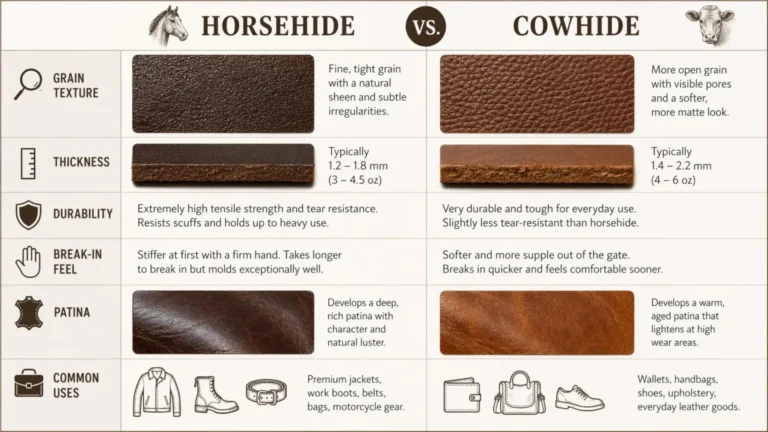
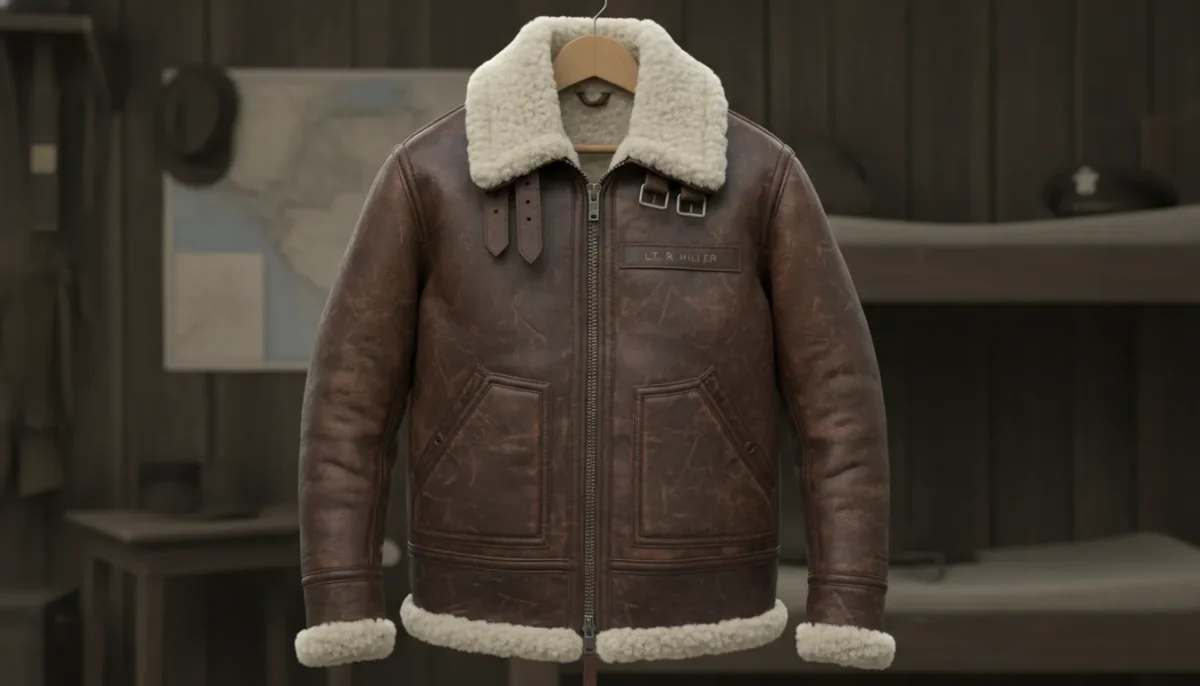
The Type B-3 was standardized on May 29, 1933, and remained virtually unaltered until its discontinuation in 1943. This heavy-duty Arctic-issue jacket featured untanned shearling sheepskin on the exterior, with extra-strong horsehide sleeve and seam overlays for added protection, a single map pocket on the right side, and heavy leather straps with a three-way stud collar closure.
This was working gear. Not fashion. Every detail existed to keep a pilot alive at 25,000 feet in an unpressurized cabin.
The Off-White Jacket That Stole the Screen
Among the dozens of brown bombers in the series, one jacket became the visual anchor of the entire show. Callum Turners character, Major John C. “Bucky” Egan, wears an off-white Type B-3 sheepskin jacket that is not a Hollywood contrivance — it is historically accurate. Egan kept his worn-in white jacket even after dark brown B-3s became standard in 1942.
Early B-3 prototypes from 1937 used unsealed sheepskin that retained its natural off-white color. The Air Force later applied a polyacrylic coating to make jackets more resistant to weather and dirt, turning them dark brown. Egan simply refused to switch. As Aero Leathers director Denny Calder put it, he got the mickey taken out of him for keeping the white one.
That defiant detail — one pilot clinging to his jacket — became the most memorable costume choice of the entire series.
The Craftsmen Behind the Screen
Aero Leather Clothing
Aero Leather Clothing was commissioned to replicate a series of authentic World War II flight jackets for the production. The collaboration began in early January 2021, though COVID-19 delays and post-production work pushed the premiere to January 2024.
Among approximately 40 jackets supplied for the production, the standout piece was Callum Turners off-white B-3, crafted to exact 1942 military specifications. Aero director Denny Calder described the experience: “Masters of the Air has been a joy to work on, the level of authenticity our garments had to meet has been totally without compromise, but that is the way we like to work.”
Aero is a family-run operation based in Galashiels, Scotland. They have supplied jackets to productions including Captain America, Bohemian Rhapsody, Empire of the Sun, and Peaky Blinders. Their reputation in the costume industry is built entirely on precision and historical accuracy.
Eastman Leather Clothing
Eastman Leather Clothing, a UK-based maker, served as the series chief outfitter and produced over 400 leather and sheepskin jackets for the production. Eastman supplied the brown B-3 jackets worn by Austin Butler, Barry Keoghan, and others, along with the Type A-2 horsehide and Type B-10 cotton jackets seen throughout the series.
Both companies bring decades of military reproduction experience. The result is a production wardrobe that historians and fashion editors alike have called remarkable.
Every Jacket Type in the Series, Explained
The Type A-2 Leather Jacket
The series depicts the gradual evolution of US military jackets, starting with the A-1 brown leather zip-up, similar to jackets worn by Britains RAF. The A-2 — a smooth horsehide or goatskin jacket with a snap collar and ribbed cuffs — came next. It carried a cleaner silhouette than the bulky B-3 and became one of the most recognizable military jacket styles in aviation history.
In the series, the A-2 represents the earlier phase of the war, before bomber crews moved to higher altitudes and needed heavier insulation.
The Type B-10 Nylon Jacket
As the war advanced toward the finale, newer pilots arrived wearing a lighter-weight nylon zip-up, reflecting the evolution in both technology and manufacturing during the war years.
The B-10 signals the shift from leather and sheepskin to modern materials. It is a quieter jacket compared to the drama of the B-3, but its appearance in the later episodes carries real narrative weight.
The Tuskegee Airmen Jackets
In an episode directed by Dee Rees, the Tuskegee Airmen wear dark brown A-1 leather zip-ups emblazoned with the signature cougar insignia of the 332nd Fighter Group. Second Lt. Alexander Jefferson pairs an ivory silk ascot with his rich brown A-1 and military khakis.
These jackets carry their own distinct identity. The iconography embedded in them — unit patches, personal insignia — makes them as much a statement of pride as protection.
What Makes These Jackets Worth Owning
Built for Altitude, Perfect for Real Life
The B-3 design was never meant for fashion week. It was engineered to function at extreme altitude in conditions most people will never face. That same engineering — sheepskin on the outside, dense shearling lining, horsehide reinforcement at high-wear points — translates beautifully to everyday cold-weather wear.
Aero Leather Clothing uses the correct B-3 weight heavy shearling sheepskin with extra strong horsehide sleeve and seam overlays, a single map pocket, and heavy leather straps with a three-way stud collar closure. All versions use a triple-marked Talon zipper on wide herringbone tape, with alloy buckles recast from originals.
When a jacket is built this way, it does not wear out. It wears in.
The Natural Aging Process
One of the most appealing qualities of a real sheepskin or horsehide jacket is what happens over time. The leather develops a patina unique to the wearer — marks from daily use, natural oils from your hands, the subtle darkening that comes from real wear. No two jackets age the same way.
This is the exact opposite of fast fashion. You are buying something that gets better the longer you wear it.
Versatility in Styling
The masters of the air jacket silhouette works across a range of casual and smart-casual outfits. Pair a brown B-3 with raw denim jeans and chunky boots for a weekend look that feels grounded and intentional. Layer it over a plain crew-neck sweater for something understated. The off-white version demands more confidence but rewards it — wear it with dark trousers and a simple knit and let the jacket do the talking.
The A-2 works even more broadly. Its slimmer profile sits well over everything from chinos to heavyweight flannels.
How to Choose the Right Version for You
Consider the Weight
The B-3 is a serious cold-weather piece. If you live somewhere that sees genuine winter temperatures, the weight and insulation make perfect sense. If your winters are mild, the A-2 or B-10 silhouette may suit you better — they offer that same aviation heritage without the bulk.
Reproduction vs. Inspired
There is a meaningful difference between a historically accurate military reproduction and a jacket inspired by the style. Reproduction pieces from makers like Aero or Eastman use period-correct materials, construction methods, and hardware. They take weeks to make and cost accordingly. Inspired versions use modern materials and manufacturing, bringing the aesthetic at a lower price point.
Neither choice is wrong — it depends on what you want from the jacket.
Fit Matters More Than Anything
A B-3 should fit with enough room to layer underneath. These jackets were designed to be worn over heavy wool sweaters and flight suits. Do not size down in search of a slim fit — you will lose both comfort and the authentic proportion that makes the silhouette work.
A Legacy That Goes Beyond the Screen
The 100th Bomb Group — the Bloody Hundredth — flew some of the most dangerous missions of the entire air war. They suffered staggering losses. The jackets they wore were not style choices. They were survival gear, personalized over time through patches, hand-painted nose art, and the simple act of keeping a particular jacket long after regulation said you should swap it out.
That history gives these garments weight that no other jacket category quite matches. When you wear one, you carry something of that story with you — not in a performative way, but in the quiet knowledge of what the design actually meant to the people who originally wore it.
The series brought that history to a new generation. The jackets did much of the work.
Conclusion
The outerwear in Masters of the Air works because every piece is historically grounded, individually crafted, and narratively purposeful. From Callum Turners legendary off-white B-3 to the dark horsehide A-2s worn by the rest of the 100th, each jacket carries real meaning. The craftsmen at Aero and Eastman Leather brought decades of expertise to ensure that authenticity came through on screen.
If the series left you wanting to own a piece of that history, you now know exactly what to look for — the materials, the makers, the details that separate a genuine reproduction from an imitation. A great flight jacket is not a purchase you make lightly. But it is one you will never regret.
Frequently Asked Questions
What kind of jacket does Callum Turner wear in Masters of the Air?
Callum Turner wears a Type B-3 shearling flight jacket in an off-white color as Major John C. “Bucky” Egan. The jacket was made by Aero Leather Clothing in Scotland to exact 1942 military specifications, based on the real jacket Egan wore during his combat missions.
Where can I buy a jacket like the one in Masters of the Air?
Aero Leather Clothing in Scotland makes an official reproduction of Major Egans off-white B-3 jacket. Eastman Leather Clothing produced the brown B-3s seen on other cast members. Both companies sell directly to the public, with made-to-order timelines of several weeks.
What is the difference between a B-3 and an A-2 flight jacket?
The B-3 is a bulky sheepskin jacket designed for bomber crews at extreme altitude, offering maximum insulation. The A-2 is a slimmer, smooth leather jacket worn by fighter and bomber pilots who flew at lower altitudes. The series shows both as part of the natural evolution of WWII aviator gear.
Is the Masters of the Air jacket historically accurate?
Yes. The production used authentic military reproductions made by specialist leather companies. Costume designer Colleen Atwood researched veterans personal photos and museum archives to ensure accuracy. The jackets were aged using period techniques, including rubbing in oil, dirt, and paraffin to replicate real combat wear.

Grayscale Jacket Editorial Team is a group of fashion writers and product researchers who share guides, reviews, and styling tips about jackets and outerwear. Their goal is to help readers choose high-quality, stylish jackets while staying updated with the latest fashion trends.