
Leather Jacket Fit Everything You Need to Know
You found a leather jacket you love. But does it actually fit the way it should? That question trips up a lot of people — because leather behaves differently from cotton or wool. It does not drape the same way. It molds, it stretches, and it eventually conforms to your body. Getting the leather jacket fit right from day one saves you from a garment that either looks sloppy or cuts off circulation every time you zip it up.
This guide walks you through every checkpoint — shoulders, chest, sleeves, length, and overall silhouette — so you leave with a clear picture of what a well-fitting leather jacket looks like on a real body. No vague advice. Just practical markers you can use the next time you try one on.
Why Leather Jacket Fit Is Not the Same as Regular Jacket Fit
Most people approach a leather jacket like any other outerwear. They check the tag, grab their usual size, and call it done. That approach leads to problems. Leather has almost zero give when it is brand new. Over weeks of wear, it softens and stretches — particularly across the chest and upper back. So a jacket that fits snugly on day one will often feel roomier after a month of regular use.
This is not a flaw. It is a feature of quality leather. The goal is to buy a jacket that fits well in its stiff state, knowing it will relax into your shape over time. Do not size up to compensate. A too-large jacket will only grow more shapeless as the leather breaks in.
According to the fitting guidance the shoulder seam is your primary reference point. Everything else follows from there.
The Core Checkpoints: How to Assess Leather Jacket Fit
Shoulders — The Non-Negotiable Starting Point
The shoulder seam must sit at the edge of your natural shoulder. Not on top, not hanging off the edge. Exactly at the break. If the seam sits even an inch too far down, the entire jacket reads as oversized — and no amount of tailoring fixes a shoulder seam on leather without an expensive, specialized alteration.
Raise your arms. Do the shoulders pull aggressively across your upper back? That means the jacket is too small. Does the shoulder seam slide forward when you move? It is too large. A correct fit lets you lift your arms comfortably with only slight resistance.
Too SmallShoulder seam sits inward. Upper back pulls tight when arms raise.
Just RightSeam lands at shoulder edge. Arms raise with minimal restriction.
Too LargeSeam droops toward the bicep. Excess fabric bunches at the arm.
Chest — Firm, Not Suffocating
Close the zipper or button the front. Stand naturally. There should be no pulling across the chest. The jacket should lie flat. You want a small amount of breathing room — enough to fit your fist between the jacket and your torso when it is zipped, but not much more than that.
Remember what was said above: leather stretches. So if the jacket feels like a gentle embrace now, it will feel like comfortable second skin in a few months. If it feels tight across the chest today, do not buy it hoping it will loosen — it will loosen, but the structural panels may distort in the process.
“A leather jacket should hug your frame without gripping it. The difference between those two things is everything.”
Sleeves — Length and Taper Both Matter
Stand with your arms at your sides. The sleeve hem should land right at your wrist bone — or at most, a centimeter below. Sleeves that reach to the knuckles look borrowed. Sleeves that expose a wide strip of shirt cuff look unfinished.
The sleeve itself should taper from the shoulder down. Baggy sleeves undermine the entire silhouette of a leather jacket. They make even an expensive piece look budget. If the sleeve taper is off but the length is correct, a leather specialist can often take in the sleeve seam — but check the cost before committing.
Jacket Length — Where It Should End
For the classic biker or moto style, the jacket hem should sit around hip level — roughly at the top of your trouser waistband or just below. Bomber styles tend to hit slightly higher, ending at the natural waist. Longer moto-coats obviously fall further, but they follow their own rules.
The key is proportion. A hem that falls too low makes shorter wearers look swallowed. A hem that hits too high exposes a wide band of shirt and throws off the visual balance of an outfit.
As the team at Buffalo Jackson explains, the ideal length for most moto and classic leather jackets lands right at the hip, allowing the jacket to cover the waistband without competing with the trouser line.
Understanding the Three Main Fit Styles
Not all leather jackets aim for the same silhouette. Before you decide whether yours fits correctly, establish which fit profile you are working with. Each one has its own benchmark for what “right” looks like.
Slim Fit
Designed to follow the contours of the body closely. Very little space between the jacket and the torso. Arms and waist are cut narrow. This style rewards a leaner build. It reads sharp and modern. If you plan to layer anything thicker than a light sweater underneath, slim fit will constrict you.
Regular Fit
The most versatile of the three. Sits close to the body without being form-fitting. Allows comfortable layering with a mid-weight sweater or hoodie underneath. Works across a wide range of body types. This is the fit most people default to when shopping for a classic moto or bomber jacket.
Relaxed Fit
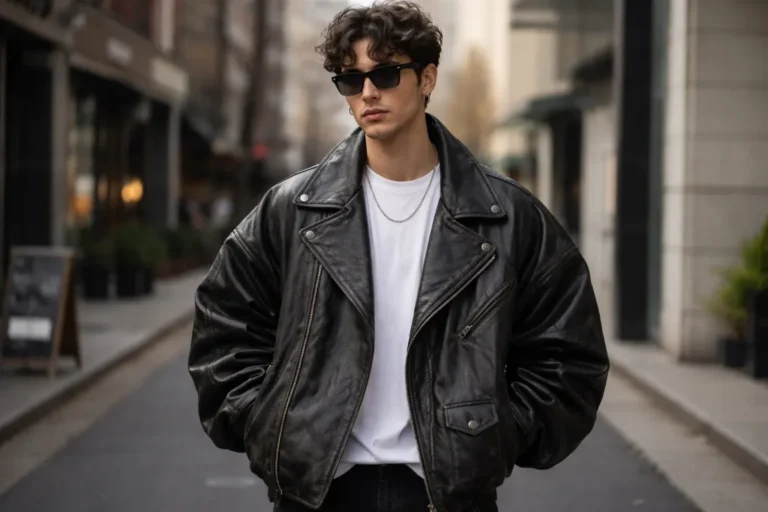
More room throughout the chest, waist, and sleeves. Intentionally casual. This style suits an oversized or vintage-inspired aesthetic. The trade-off is structure — relaxed fit jackets can look shapeless on slimmer frames unless the leather itself has a strong drape. Best approached deliberately, not by accident.
The Angel Jackets fit guide does a solid job of breaking down how each of these profiles reads on different body types — worth a look if you are still narrowing down which style suits you.
Common Leather Jacket Fit Mistakes (and What to Do Instead)
Sizing Up to Layer
This is the most common error. Someone plans to wear a chunky knit underneath and buys a jacket a size larger to accommodate it. What they get is a jacket that fits poorly over everything. The shoulder seam slides. The torso bags out. The sleeves look like tubes.
Instead, decide your primary use before you buy. If you wear the jacket mostly over a t-shirt, buy for that silhouette. If layering is the priority, try it on with a sweater in the store.
Ignoring the Back Panel
Most people check the front of a jacket and call it a day. The back panel tells a different story. Reach your arms forward as if gripping a steering wheel or hugging someone. Does the back ride up sharply? Does the collar pull away from your neck? Both are signs the jacket is a touch too small across the upper back.
Confusing Stiffness with Poor Fit
Brand new leather feels rigid. That is normal. Do not mistake that stiffness for a bad fit. The question to ask is whether the structure of the jacket — seam placement, panel lines, overall silhouette — aligns with your body when you stand naturally. The leather will soften. The structure will not change.
Skipping the Seated Test
Sit down in the jacket. Cross your arms. If the back strains dramatically or the collar chokes, that is information. Leather jackets go everywhere you go. They should move with you.
Can You Alter a Leather Jacket for Better Fit?
Yes — with some important caveats. Leather alterations require a specialist. Not every tailor works with leather, and the ones that do charge a premium for good reason. The material does not forgive errors the way fabric does. Needle holes are permanent.
The most achievable alterations include taking in the side seams to slim the waist, shortening the sleeve length, and narrowing the sleeve taper. These are straightforward for an experienced leather craftsman.
What you cannot easily fix: shoulder width, back panel width, and overall jacket length. These require restructuring the foundational panels of the garment and often cost more than the jacket itself.
The conclusion here is simple. Get the shoulders and chest right at purchase. Let the rest be adjusted if needed.
How Leather Jacket Fit Looks Different Across Styles
Biker or Moto Jacket
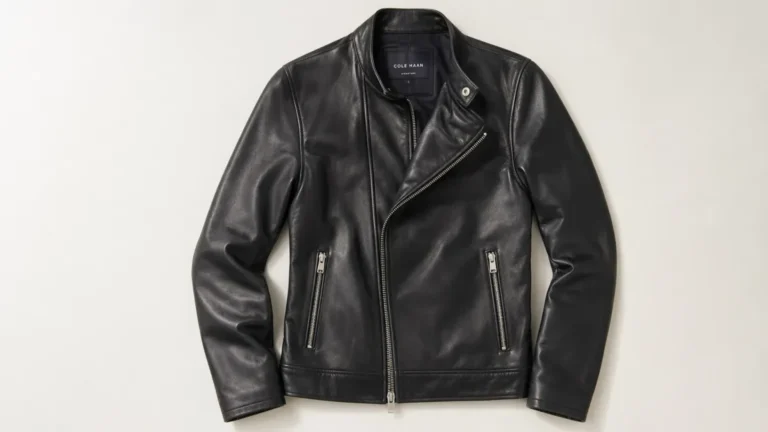
The moto jacket traditionally fits close to the body. The silhouette reads structured and angular. Expect a slight taper at the waist. The asymmetric front zip naturally pulls the fabric across the torso — check that this zip lies flat and does not pull the panel outward when closed.
Bomber Jacket
Bombers sit differently. The ribbed waistband and cuffs create a natural blouson effect. Do not confuse this relaxed mid-section with a loose fit — the shoulders and chest should still sit correctly. The hem should not drop below the hips or the jacket starts to look like a flight suit.
Cafe Racer
The cafe racer is the most minimal leather jacket silhouette — no lapels, band collar, clean lines. It should fit like a second skin across the upper body. This style has very little margin for error. Buy it slim or do not buy it at all.
Trucker Style
Leather trucker jackets carry more room across the chest and a boxier cut. This is intentional. The fit is more casual and workwear-adjacent. The shoulder seam rule still applies. The rest of the body is expected to have more volume.
Getting It Right the First Time
A leather jacket is not a throwaway purchase. It is something you invest in and wear for years — sometimes decades. That makes the fit matter more than it does with almost any other garment in your wardrobe.
Start with the shoulders. Confirm the chest. Check the sleeve length. Sit down, move around, and be honest about what you feel. A jacket that fits you well right now, in its stiffest state, will only get better with time. One that does not fit right from the start will never stop feeling off.
Take your time in the fitting room. The leather is worth it.
Frequently Asked Questions
How tight should a leather jacket fit when you first buy it?
A new leather jacket should feel snug but not restrictive. You should be able to zip it fully and move your arms without strain. Since leather stretches with wear, buying it fitted from day one means it will conform to your body over time — ending up with a perfect, personalized shape.
Where should the shoulder seam of a leather jacket sit?
The shoulder seam should land exactly at the edge of your natural shoulder — the bony tip where your arm meets your torso. If it hangs over the arm, the jacket is too large. If it pulls inward, it is too small. This is the most important fit point on any leather jacket.
Can a leather jacket be altered if it does not fit well?
Yes, but only partially. A skilled leather tailor can slim the waist, shorten the sleeves, or narrow the sleeve taper. However, shoulder width and overall chest size are very difficult and expensive to alter. Always get the shoulders right at purchase and adjust the rest if needed.
How long should a leather jacket be on your body?
For most classic styles — biker, moto, cafe racer — the hem should fall right at hip level, near the top of your trouser waistband. Bomber jackets sit slightly higher at the natural waist. A hem that falls too low overwhelms shorter frames, while one too high breaks the outfit’s proportions.

Grayscale Jacket Editorial Team is a group of fashion writers and product researchers who share guides, reviews, and styling tips about jackets and outerwear. Their goal is to help readers choose high-quality, stylish jackets while staying updated with the latest fashion trends.