
What Are the Different Types of Bomber Jackets?
You came here with a clear question. You want to know exactly what types of bomber jackets exist before you spend your money. Smart move. The market is crowded, styles overlap, and the wrong pick can feel like a mistake the moment you zip it up.
This guide breaks down every major bomber jacket style in plain language. By the end, you will know which cut matches your body type, which fabric suits your climate, and which silhouette fits the occasion. No fluff, no filler.
Where Did the Bomber Jacket Come From?
The story starts in the cockpit. Military pilots in World War I needed warm, durable outerwear that moved with them. The U.S. Army Air Corps developed the MA-1 flight jacket in the 1950s, and that silhouette became the blueprint for every bomber jacket you see today.
What started as utilitarian military gear crossed over into streetwear by the 1980s. Hip-hop culture, skateboarding, and later high fashion all adopted it. Today the jacket sits comfortably across every style category from workwear to luxury fashion.
The Main Types of Bomber Jackets
Classic
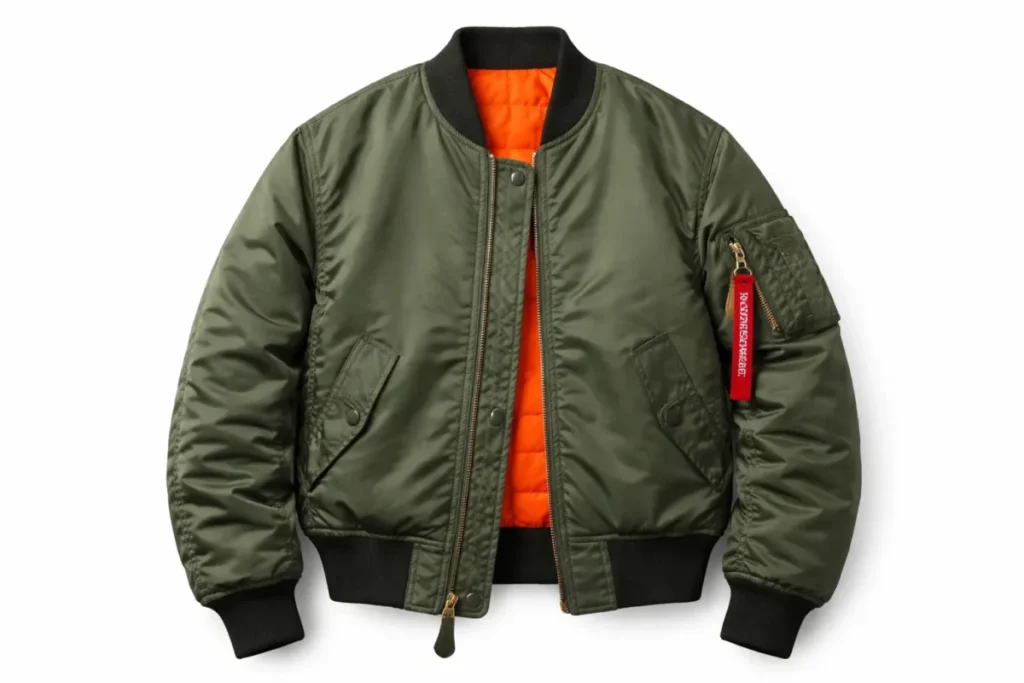
The MA-1 Flight Jacket
The original. It features a ribbed collar, cuffs, and hem, a zippered front, and that iconic sage green or black nylon shell. The orange lining is reversible in many versions. It sits at the hip, cuts clean, and works equally well over a hoodie or a plain tee. This is the template everything else is based on.
Luxury
Satin and Silk Bomber Jackets
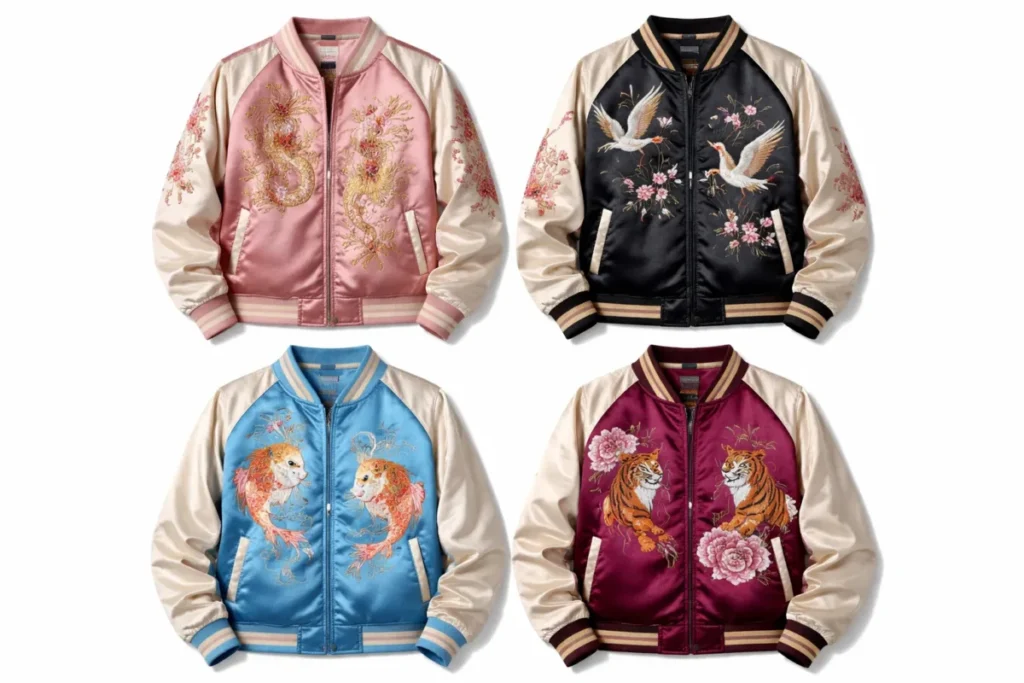
High-fashion runways elevated the bomber jacket into a glossy statement piece. Satin shells catch light beautifully. They are thinner and not built for cold weather, but they layer well over a turtleneck in mild temperatures. You will see embroidered designs, floral patterns, and bold color blocking in this category.
Rugged
Leather Bomber Jackets
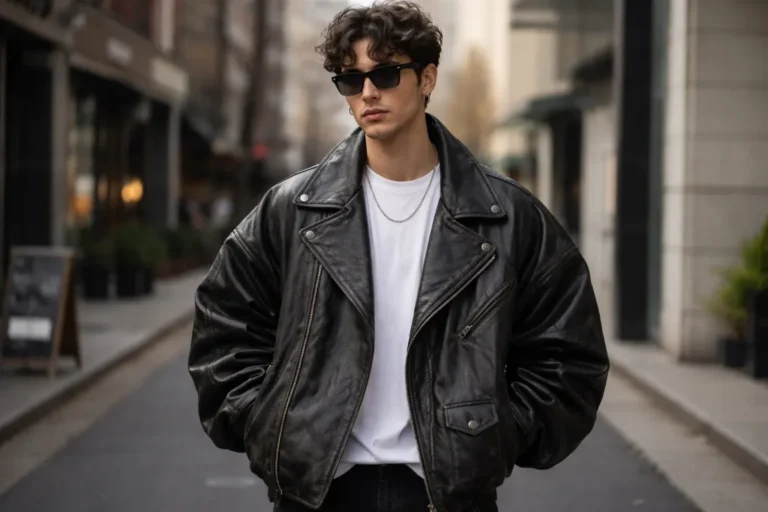
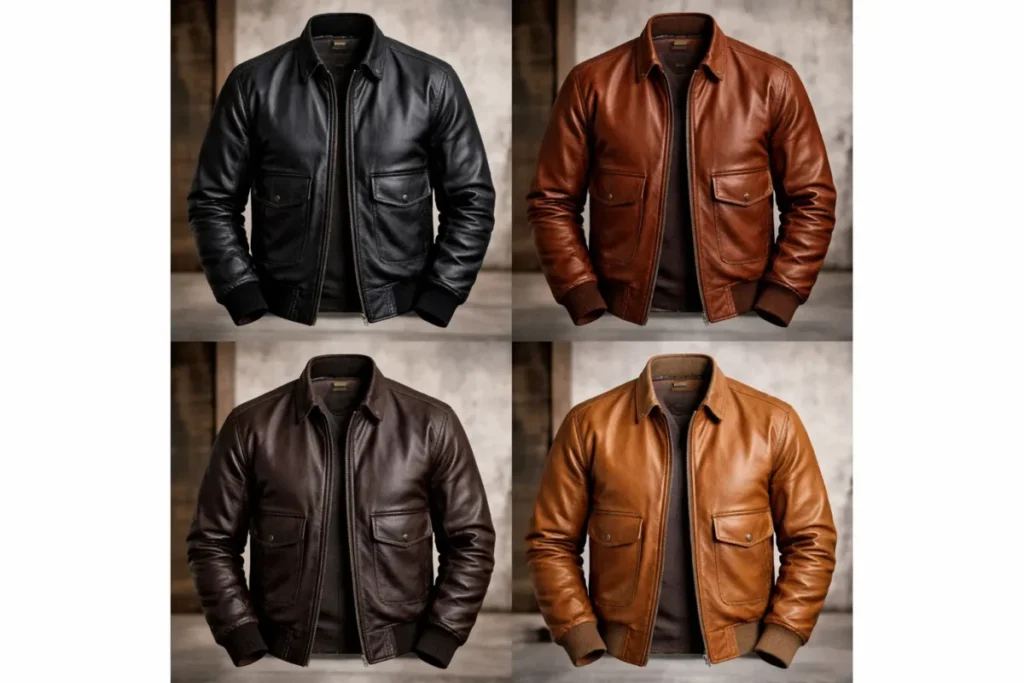
Leather adds weight and edge. The leather bomber traces back to early aviators and World War II pilots who needed protection against wind and cold. Modern versions come in genuine leather, suede, and high-quality vegan alternatives. They mold to the body over time, making them a long-term investment piece that only looks better with age.
Warm
Quilted Bomber Jackets
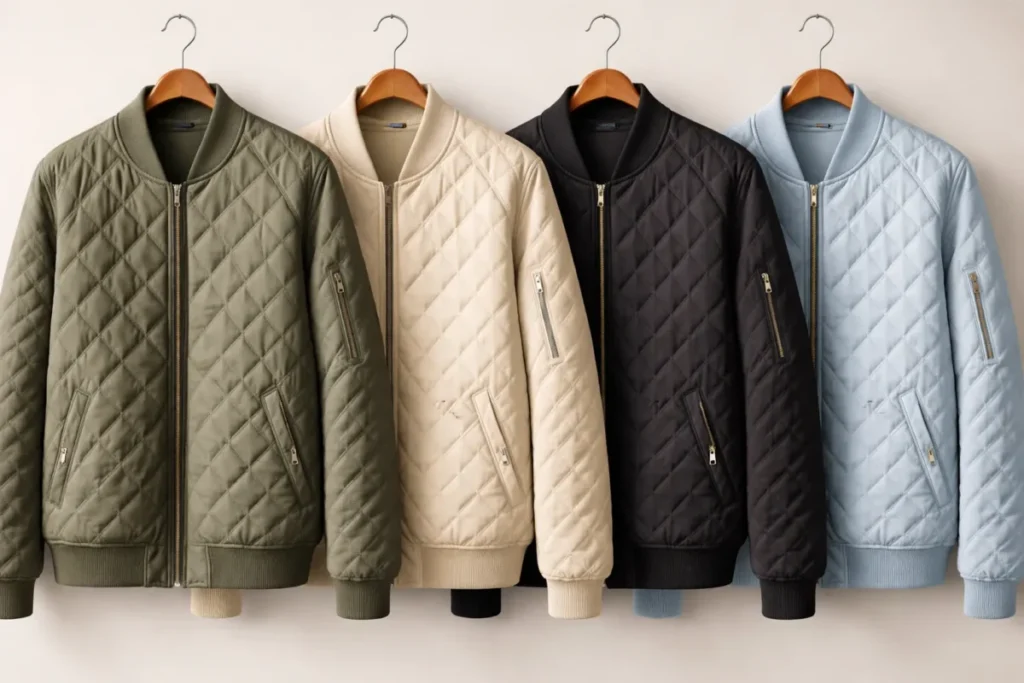
Think of this as the intersection of puffer jacket and bomber silhouette. Quilted bombers use a diamond or square stitch pattern filled with down or synthetic insulation. They trap heat efficiently without the bulk of a full puffer. Great for cold commutes, they still hold a clean enough shape for casual office environments.
Sporty
Varsity Bomber Jackets
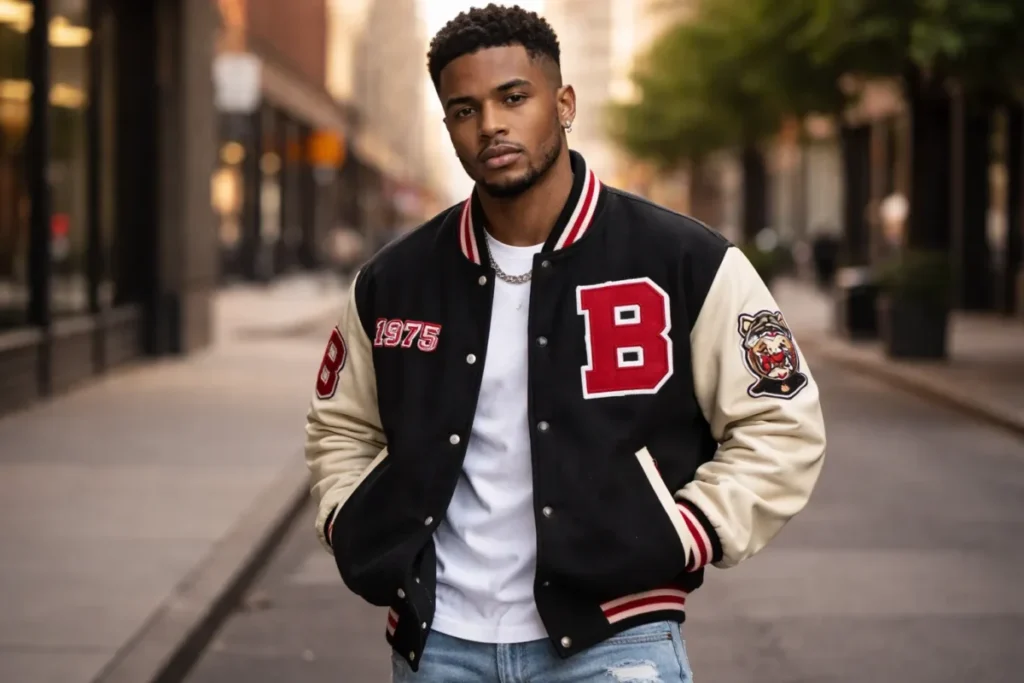
Also called a letterman jacket. Wool body, leather sleeves, chenille patches on the chest or back. Originally tied to American high school and university athletics in the early 20th century, the varsity bomber hit its mainstream fashion peak in the 1980s and keeps cycling back. Wear it with straight-leg denim or over a simple black outfit for a clean contrast.
Technical
Harrington Jacket
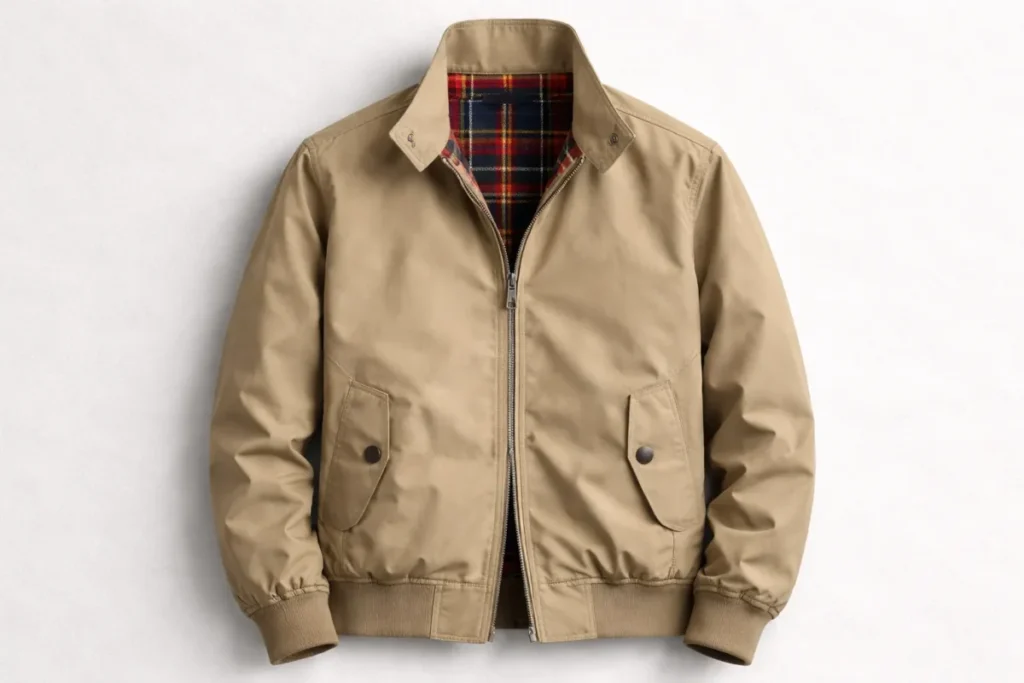
Technically adjacent to the bomber family. It shares the cropped fit and zip front but uses a check or tartan lining and a lighter cotton-polyester shell. It is slimmer, less structured, and dresses up more easily. A solid choice for people who want the bomber shape without the bulk.
Streetwear
Souvenir and Sukajan Jackets
Born in post-World War II Japan. American soldiers stationed in Japan commissioned local artisans to hand-embroider silk or satin jackets with Japanese motifs: dragons, tigers, cherry blossoms, and cranes. The sukajan jacket is now a staple of Japanese streetwear and has been adopted globally. These are bold, wearable art pieces.
Modern
Oversized Bomber Jackets
Contemporary fashion pushed the bomber silhouette wider and longer. Oversized versions drop past the hip, feature dropped shoulders, and pair naturally with slim trousers or fitted jeans for a balanced proportion. This cut works especially well for layering thick knitwear underneath during winter months.
Also Read : What Is a Bomber Jacket?
How Fabric Changes Everything
The material of a bomber jacket determines warmth, durability, style, and occasion. Here is a quick breakdown of the most common options.
Nylon and Polyester
Lightweight, wind-resistant, and easy to clean. This is the material of the classic MA-1. It dries fast and compresses well. The trade-off is that it looks more casual and wears out faster under heavy daily use.
Leather
Heavy, warm, and incredibly durable. Genuine cowhide or lambskin leather jackets can last decades with proper care. They develop a patina over time that synthetic alternatives cannot replicate. Heavier to carry but unmatched in longevity.
Wool
Wool bombers bring a more structured, refined look. They resist odors naturally, regulate temperature well, and hold a cleaner silhouette than nylon. Best suited for cooler months and slightly dressier occasions.
Cotton and Canvas
Breathable and versatile for warmer months. Cotton bombers layer well in spring and autumn. They are easier to care for than leather and hold color well, though they lack the weather resistance of synthetic shells.
Choosing the Right Fit
Fit is where most buyers go wrong. Bomber jackets have a defined silhouette. The ribbed hem should sit at or just below the hip. The shoulders need to align precisely with your shoulder joints. A jacket that droops off the shoulder immediately reads as ill-fitting, regardless of the brand or price point.
“A bomber jacket that fits well will flatter nearly every body shape. A bomber jacket that does not fit well will flatter none.”
If you have a broader chest, look for styles with a relaxed body but a fitted waist. If you are on the slimmer side, slim-cut nylon bombers or Harrington styles will give the most flattering result. For taller frames, oversized cuts prevent the jacket from looking too short in the torso.
How to Style Each Type
Classic MA-1 or Nylon Bomber
Keep it simple. Dark jeans or cargo trousers, a white crew-neck tee, and clean leather sneakers. The jacket does the work. Avoid overstyling the rest of the outfit.
Leather Bomber
Pair with slim black jeans and Chelsea boots for a sharp edge. Or contrast it with light grey trousers and a knit sweater for a softer, more layered look.
Satin Bomber
Let the jacket be the focal point. Pair it with plain black trousers and minimal footwear. A satin bomber competes with busy patterns, so keep everything else neutral.
Varsity Jacket
Straight-leg jeans, a tucked-in graphic tee, and white sneakers. Or wear it over a long-sleeve mock-neck for a clean, collegiate look.
Quilted Bomber
This is your practical cold-weather layer. It works over business casual trousers and Oxford shirts, making it one of the more versatile options in the category. Dark olive, navy, and charcoal are the most flexible color choices.
Color and Pattern Choices
Neutral tones dominate the classics. Sage green, black, navy, and olive are the safest starting points for anyone building a versatile wardrobe. These colors work across multiple outfit combinations without requiring much thought.
Bold colors and patterns work best on satin and varsity styles where the jacket is designed to be the statement. Sukajan jackets are inherently expressive, so leaning into the artwork is the point.
If you already own a wardrobe built around neutrals, a single bold bomber can anchor an entire outfit. Pick the jacket first, then build the outfit around it.
Wrapping It Up
Bomber jackets have earned their longevity. They work because the core design is functional and proportionally balanced. Whether you go classic nylon, luxurious satin, or rugged leather, the silhouette translates cleanly across occasions, seasons, and personal styles.
Start with one style that matches how you actually dress day to day. A good bomber jacket does not need to be expensive to look sharp. It needs to fit well, suit your climate, and work with what you already own. Get that right, and you will reach for it constantly.
Frequently Asked Questions
People Also Ask
What is the difference between a flight jacket and a bomber jacket?
They refer to the same garment. Flight jackets were the original military term, used by pilots from WWI onward. Bomber jackets became the civilian and fashion industry term for the same cropped, zip-front silhouette with ribbed collar, cuffs, and hem.
What type of bomber jacket is best for cold weather?
Quilted bombers with down or synthetic fill offer the best warmth in a bomber silhouette. Leather bombers also insulate well due to material density. Classic nylon MA-1 styles are better suited for mild or cool weather rather than harsh winter cold.
Are bomber jackets still in style in 2025?
Yes. Bomber jackets remain a consistent wardrobe staple across streetwear, casual, and smart-casual dressing. Oversized silhouettes and sukajan embroidered styles are particularly strong right now, alongside the enduring classic MA-1 in nylon and leather.
How do I know what size bomber jacket to buy?
The shoulder seam must align with your shoulder joint. The hem should sit at or just below the hip. If you plan to layer thick knitwear underneath, size up by one. Bomber jackets look better slightly relaxed than overly fitted, so when in doubt, go up.

Grayscale Jacket Editorial Team is a group of fashion writers and product researchers who share guides, reviews, and styling tips about jackets and outerwear. Their goal is to help readers choose high-quality, stylish jackets while staying updated with the latest fashion trends.