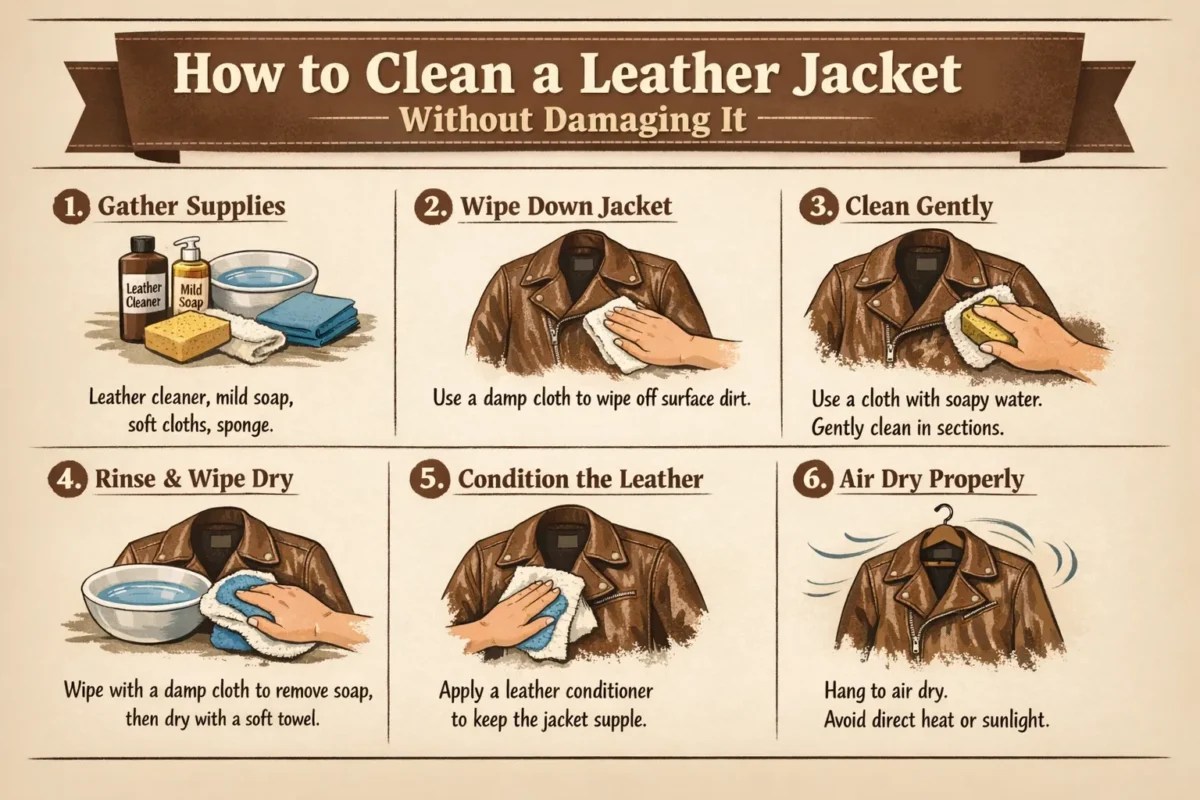
How to Clean a Leather Jacket Without Damaging It
You own a leather jacket you love. Maybe it cost you a lot. Maybe it just fits perfectly. Either way, a stain appears, or a musty smell creeps in, and suddenly you panic. You do not want to wreck it. That fear is completely valid.
Cleaning it does not have to be scary. With the right steps and a little patience, you can restore it at home without paying for a professional. This guide gives you everything you need to clean it safely, condition it properly, and keep it looking sharp for years.
Understanding Your Jacket Before You Clean It
Not all leather is the same. The type you have determines how you should clean it. Getting this wrong is where most people damage their jackets.
Full-Grain and Top-Grain Leather
These are the most common types found in quality jackets. They are durable, but they respond well only to gentle, pH-balanced cleaners. Harsh chemicals strip the natural oils and cause cracking.
Suede and Nubuck
These textured finishes require completely different care. Water can stain suede permanently. Never use liquid cleaners on them. Stick to dry-brushing and specialized suede erasers instead.
Faux or Bonded Leather
This synthetic material looks like leather but behaves very differently. It peels under heat and breaks down with oil-based conditioners. Check your care label before assuming anything.
Pro Tip: Always test any cleaner on a hidden area first, such as the inside hem or under the collar. Wait 10 minutes and check for discoloration before applying it anywhere visible.
What You Will Need
Gather these items before you start. Having everything ready makes the process smooth and prevents you from rushing mid-clean.
- Distilled water (tap water can leave mineral marks)
- Mild, pH-neutral soap or a dedicated leather cleaner
- Two soft microfiber cloths
- A soft-bristle toothbrush or nail brush for seams
- A quality leather conditioner
- A dry, well-ventilated space away from direct sunlight
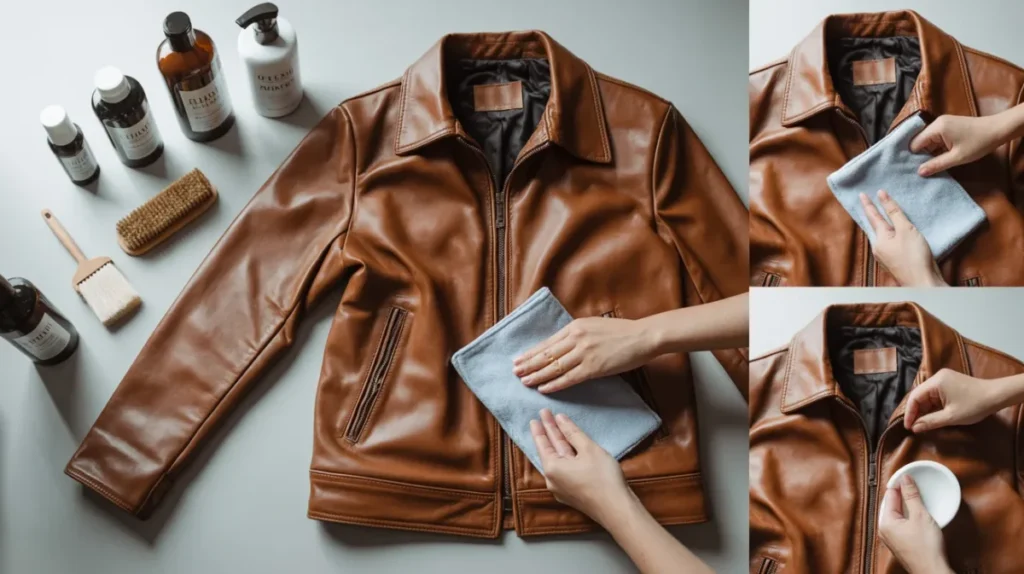
How to Clean a Leather Jacket Step by Step
Step 1: Remove Loose Dirt First
Shake the jacket gently. Use a dry microfiber cloth to wipe down the entire surface. Brush away dust from seams and zippers with a soft brush. You need a clean base before introducing any moisture.
Step 2: Mix Your Cleaning Solution
Combine a few drops of mild soap with distilled water. Stir gently. The solution should be barely soapy. If it lathers heavily, you have used too much soap and it can leave residue.
Step 3: Clean in Small Sections
Dampen one microfiber cloth with the solution. Wring it out until it is barely wet. Work in small circular motions across one section at a time. Do not scrub. Do not press hard. Let the cloth do the work.
Move to seams and crevices with your soft brush. Dip it lightly in the solution and work gently along the stitching. This is where grime hides most.
Step 4: Wipe Away Residue
Use your second cloth dampened with plain distilled water. Go over the areas you cleaned to remove any soap traces. Leftover soap dries out the material and dulls the finish.
Step 5: Dry It Properly
Hang the jacket on a wide, padded hanger. Never use a wire hanger. It distorts the shoulder shape. Keep it in a cool, shaded room with good air circulation. Do not use a hairdryer. Do not hang it near a heater or in sunlight. Rushing the drying process causes the material to crack.
Allow at least 12 to 24 hours before moving to the next step.
Important: Never put a leather jacket in a washing machine or tumble dryer. The agitation and heat cause irreversible damage to both the material and the lining.
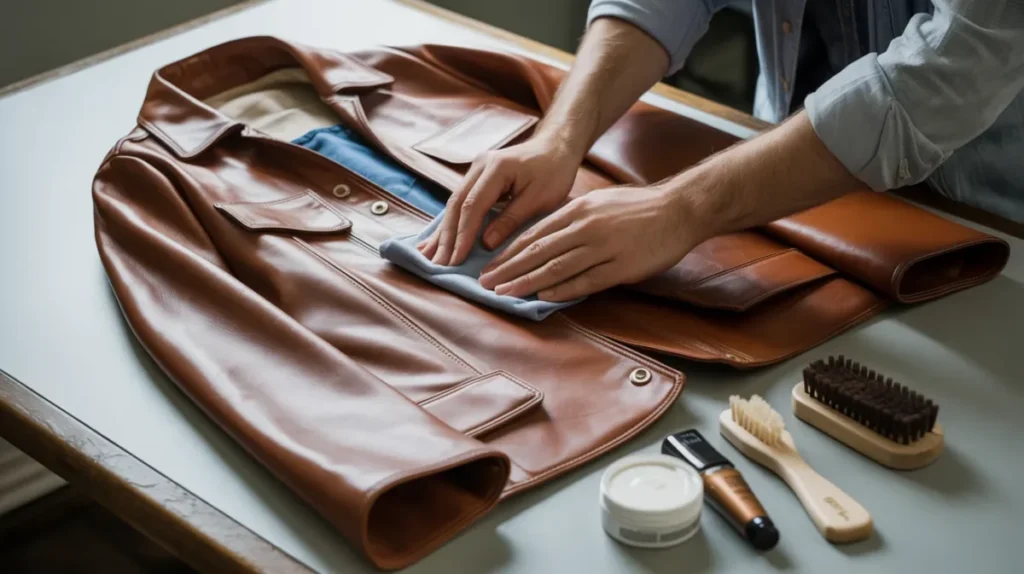
How to Deal With Common Stains
Grease or Oil Stains
Act quickly. Blot, do not rub. Sprinkle a small amount of cornstarch or baking soda directly on the stain. Leave it for a few hours to absorb the oil. Brush away gently with a soft cloth. Repeat if needed before doing a full clean.
Ink Marks
Dab a cotton swab in rubbing alcohol. Apply only to the ink spot. Do not spread it. Blot gently and allow to dry completely before conditioning. This method works well on smooth surfaces but test on suede with extreme caution.
Mold or Mildew
Mix equal parts water and white vinegar. Dampen a cloth and wipe down affected areas. Let it air dry fully in a ventilated space. Follow immediately with conditioning to replenish moisture lost during the cleaning process.
Salt Stains from Winter
Mix one tablespoon of white vinegar with one cup of warm water. Apply with a cloth using gentle circular motions. Salt is abrasive and needs to be neutralized before it continues to wear down the finish.
Conditioning After Cleaning
Conditioning is not optional. Every cleaning session removes some of the natural oils that keep leather supple. Without replenishment, it dries out and eventually cracks. Think of conditioner the way you think of moisturizer for skin.
Apply a small amount of leather conditioner to a clean cloth. Work it into the jacket using gentle circular motions. Cover the entire surface. Pay extra attention to areas that bend frequently, such as the elbows and collar, since these are prone to cracking.
How to Store a Leather Jacket the Right Way
Even the best cleaning routine means nothing if you store the jacket poorly. Here is how to protect your investment between wears.
- Use a breathable garment bag. Plastic traps moisture and invites mold.
- Store in a cool, dry environment away from direct light. Sunlight fades the color over time.
- Never fold it for long-term storage. Creases set permanently into the material.
- Keep it on a padded hanger to maintain the shoulder structure.
- Stuff the arms loosely with acid-free tissue paper if storing for longer than a month.
Humidity is the enemy. If you live in a humid climate, place a silica gel packet near the jacket to absorb excess moisture.
How Often Should You Clean It
You do not need to clean your jacket after every wear. Over-cleaning strips essential oils and shortens its life. Follow this simple schedule instead.
- Wipe-down: After every few wears with a dry cloth.
- Spot clean: As soon as stains occur.
- Full clean: Two to three times per year, or at the end of each season.
- Conditioning: Every three to four months, even without a full clean.
When to Call a Professional
Some situations go beyond what home care can fix. Know when to step back and get expert help.
- Deep-set stains that do not respond to two or three cleaning attempts
- Large areas of mold or mildew that have spread into the lining
- Peeling or flaking on bonded leather that covers a large surface
- Color fading that you want professionally re-dyed
- Structural damage to zippers, seams, or hardware
A reputable leather specialist will clean, condition, and restore your jacket properly without guesswork. It costs more, but it is far cheaper than replacing a jacket you love.
Keep It Clean, Keep It Yours
Your jacket tells a story. Every scuff and crease adds character. But dirt, grime, and neglect tell a different story entirely.
Cleaning it is not complicated. It just requires the right approach, a little time, and the confidence to do it carefully. Follow these steps and you will not damage it. You will extend its life, deepen the patina, and keep wearing it for decades.
Treat it well and it will do the same for you.
Frequently Asked Questions
Can I clean a leather jacket at home without ruining it?
Yes. Use a damp microfiber cloth with mild soap and distilled water. Work gently in small sections. Avoid scrubbing or soaking. Always condition afterward to restore moisture. Most leather jackets respond very well to careful home cleaning.
What is the best way to remove a stain from a leather jacket quickly?
Blot the stain immediately, do not rub. For oil, use cornstarch to absorb it. For ink, dab with rubbing alcohol on a cotton swab. For general stains, a pH-balanced leather cleaner works best. Act fast for the best results.
How do I clean a leather jacket that smells musty or moldy?
Wipe it down with a cloth dampened in equal parts water and white vinegar. Air dry in a well-ventilated space away from direct sunlight. Follow up with conditioner. For heavy mold inside the lining, consider a professional cleaner.
How often should I condition my leather jacket after cleaning it?
Condition your jacket every three to four months, or immediately after every full clean. Conditioning replenishes the natural oils that cleaning removes. It prevents cracking and keeps the material supple and soft over time.

Grayscale Jacket Editorial Team is a group of fashion writers and product researchers who share guides, reviews, and styling tips about jackets and outerwear. Their goal is to help readers choose high-quality, stylish jackets while staying updated with the latest fashion trends.