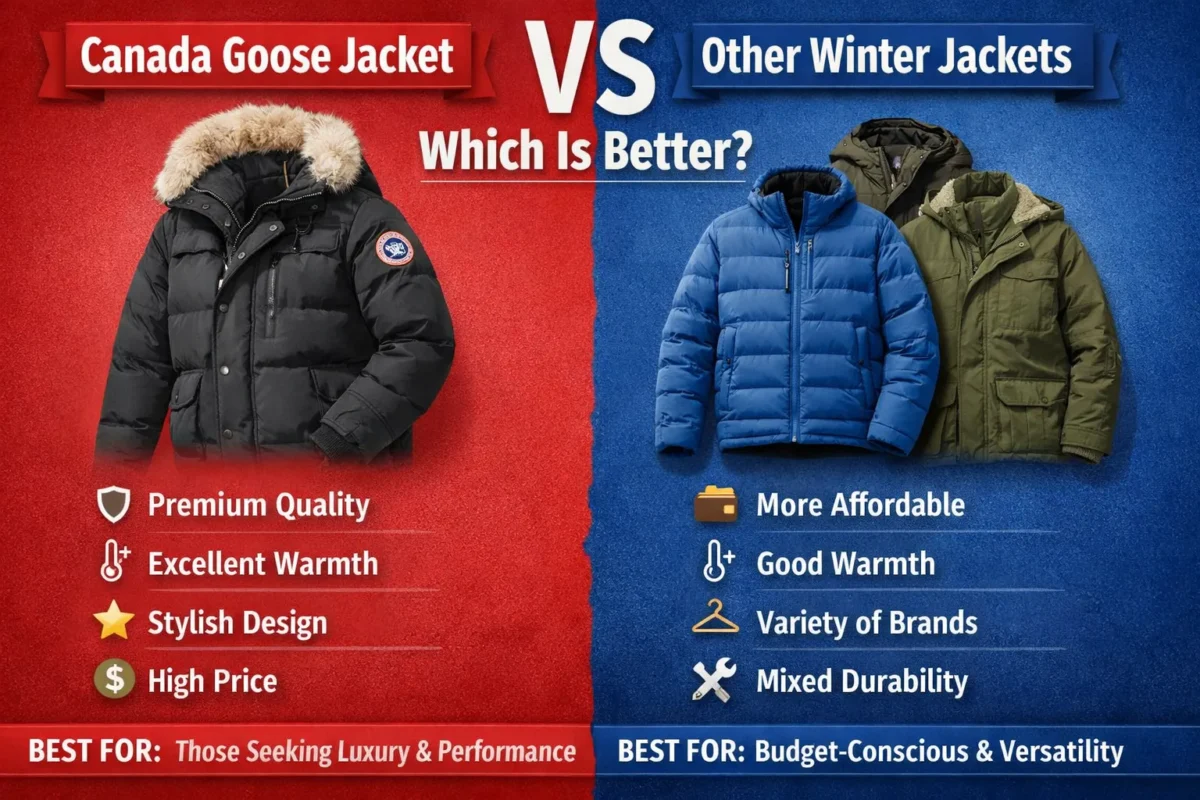
Canada Goose Jacket vs Other Winter Jackets: Which Is Better?
You have seen it everywhere. That iconic patch on the arm, the fur-lined hood, the price tag that makes you pause. The Canada Goose jacket has become a symbol of serious winter outerwear. But is it actually better than the competition, or are you paying for a logo?
That is exactly what this guide breaks down. We compare warmth, build quality, value, and real-world performance across the top names in winter outerwear. By the end, you will know exactly which jacket fits your life and your budget.
What Makes the Canada Goose Jacket Stand Out?
Before jumping into comparisons, it helps to understand what Canada Goose actually brings to the table.
Premium Insulation and Temperature Ratings
Most Canada Goose parkas use 625-fill Canadian white duck down. The insulation is temperature-rated for 15 degrees to -5 degrees Fahrenheit, making it genuinely capable in brutal cold. For extreme conditions, their Expedition Parka pushes even further. Designed for polar expeditions and long, frigid snowmobile commutes in cold northern latitudes, it delivers incredible warmth and function in severe conditions.
That level of cold-weather engineering is not just marketing copy. It reflects decades of field-tested design.
Construction and Fit
One of the most common complaints about bulky parkas is that they restrict movement or add unwanted volume to your frame. Canada Goose jackets stand out because wearers can easily walk around and move in them, without the constrained feeling that many other down-insulated coats from popular brands produce.
The fit tends to be tailored enough for daily city wear while still delivering serious cold protection. Features like drawstring waists, storm flaps, and adjustable hoods are standard across most models.
Lifetime Guarantee
This is a big one. Canada Goose offers a lifetime warranty on their products. If your jacket gets damaged due to a manufacturing defect, they will either fix it or send you a replacement. That kind of commitment shifts the conversation from “expensive jacket” to “long-term investment.”
Also Read : How to Style a Leather Jacket: Outfit Ideas for Every Occasion
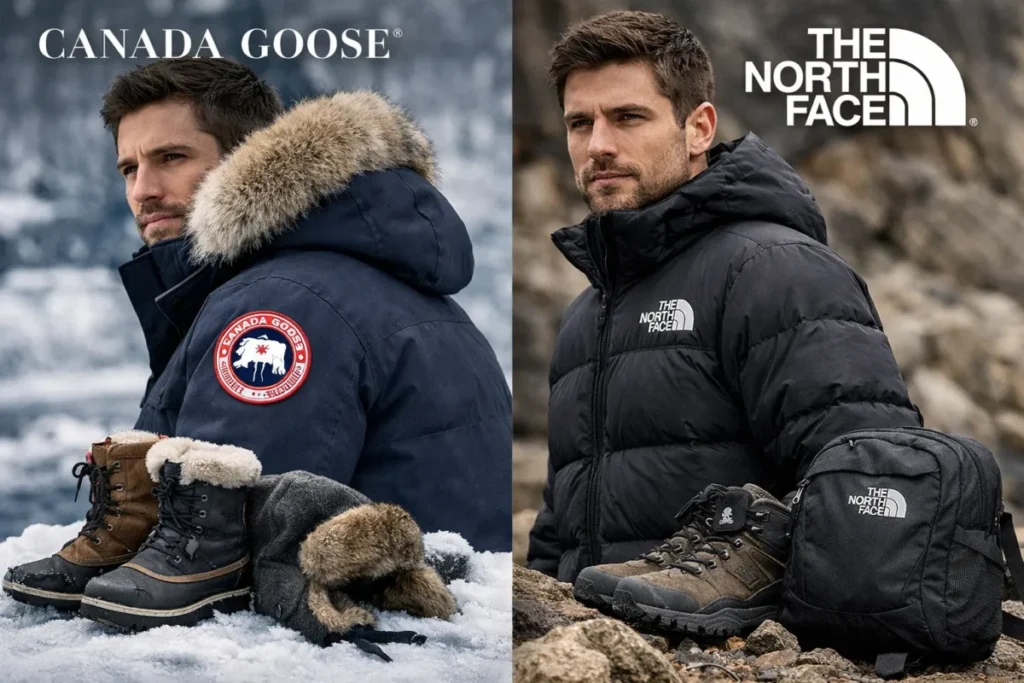
Canada Goose vs The North Face
The North Face is the most direct competition for everyday winter wear. It sits at a more accessible price point and covers a wide range of climates.
Warmth and Performance
The North Face McMurdo costs far less than Canada Goose and covers most people’s needs with ease. Durability holds up for seasons of salt and sidewalks. For someone commuting through a cold city, it checks most of the boxes without the premium price tag.
However, the gap widens once temperatures drop sharply. Canada Goose leads in extreme cold performance. The fill power, the Arctic Tech shell material, and the hood engineering all contribute to warmth that North Face models struggle to match at their standard price range.
Value and Versatility
The North Face wins on versatility. The North Face Bedford Down Parka uses 550-fill down insulation, providing excellent warmth while maintaining strong compressibility, making it easy to pack or layer when needed. If you travel often or need a jacket that transitions across seasons, the North Face offers more flexibility.
For the person who needs one jacket to handle the absolute worst of winter, Canada Goose pulls ahead. For everyone else, the North Face delivers strong value.
Bottom line: North Face for the everyday commuter. Canada Goose for serious cold-weather performance.
Also Read : Common Mistakes When Using a Thunder Jacket for Dogs
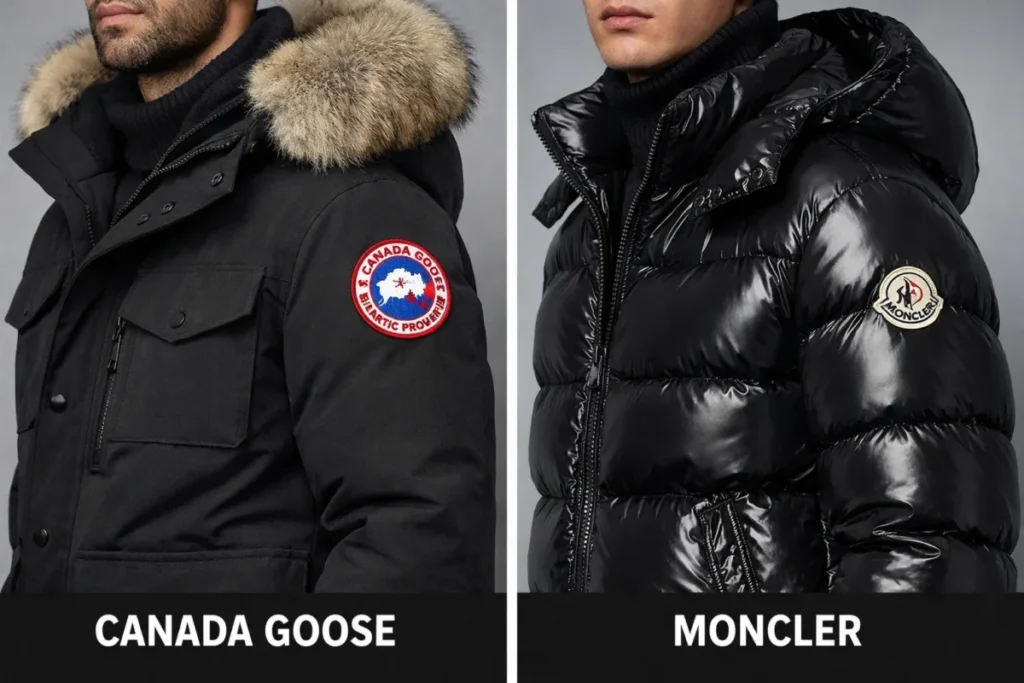
Canada Goose vs Moncler
Both brands occupy the luxury winter jacket space. The difference lies in what they prioritize.
Style vs Function
Moncler fits tend to be slimmer, sharper, and more stylized. The brand’s fashion reputation is well-deserved, as they are always pushing boundaries and blending designer fashion with high-quality warmth technology.
Canada Goose leans the other way. Canada Goose offers a no-frills look that is as versatile as the denim jean. Wear it on practically any occasion and you immediately look bold and ready for winter.
If you dress up often and want your outerwear to match that aesthetic, Moncler is the obvious pick. If you want a jacket that performs in real winter conditions and looks sharp doing it, Canada Goose wins.
Price and Warranty
Canada Goose parkas and jackets range from about $500 up to $1,400. Moncler’s selection is in excess of $1,000 with almost nothing cheaper than that price point.
The warranty difference is stark. Canada Goose backs their products with a lifetime guarantee. Moncler offers no such coverage, and actually advises that their jackets should not be worn in extreme conditions. That is a notable limitation for a brand positioned as luxury outerwear.
Bottom line: Moncler for fashion-forward buyers. Canada Goose for those who want performance, durability, and long-term value.
Canada Goose vs Budget Alternatives (Eddie Bauer, Fjallraven, and Others)
Not everyone can or should spend $900 or more on a jacket. The good news is that the mid-range market has improved significantly.
Eddie Bauer
Eddie Bauer delivers solid warmth and respectable construction at a fraction of the price. The Eddie Bauer Superior Down Parka is considered an excellent value, offering affordable, functional winter protection without compromising on warmth. Some reviewers note that zipper quality could be improved, but the overall package punches above its price point.
Fjallraven
Unlike Canada Goose and its ethical controversies, Fjallraven is a brand that boasts 100% traceability. Their Expedition Down Lite Jacket uses 90% goose down with 700 CUIN fill power, delivering efficient warmth in a lighter profile. If sustainability matters to you, Fjallraven deserves serious consideration.
The Key Trade-Off
When searching for an alternative to Canada Goose, several key factors help find the best match: insulation quality, water resistance, style preference, and price comparison. Budget alternatives can check three of those four boxes comfortably. Where they tend to fall short is in extreme cold performance and long-term durability.
Bottom line: Budget alternatives work well for moderate climates. For temperatures that consistently drop below -10C, the gap between Canada Goose and budget brands becomes hard to ignore.
Who Should Actually Buy a Canada Goose Jacket?
This is the real question. The jacket is genuinely excellent. But excellence does not mean it is right for everyone.
Buy it if you:
- Live in or regularly visit regions with harsh winters (-15C and below)
- Want one high-quality jacket that lasts a decade or more
- Value the lifetime warranty and premium craftsmanship
- Wear your outerwear heavily and need it to hold up
Skip it if you:
- Live in a mild climate where temperatures rarely dip below freezing
- Need a jacket that packs down for travel
- Are looking for high-fashion outerwear over performance
- Have a tight budget and cannot justify the premium
Canada Goose is distinguished for having some of the best winter jackets on the market, with a Thermal Experience Index reaching extreme levels of -25 degrees Fahrenheit and below. Every coat is made with premium fabrics and comes with a lifetime warranty, making the investment worthwhile.
That said, for the average city person, a great compromise from brands like Helly Hansen or Eddie Bauer will do the job. Know your climate. Know your needs. Then decide.
A Quick Comparison at a Glance
| Feature | Canada Goose | The North Face | Moncler | Budget Brands |
|---|---|---|---|---|
| Extreme cold performance | Excellent | Good | Moderate | Fair |
| Price range | $500 – $1,400+ | $200 – $600 | $1,000 – $3,000+ | $100 – $350 |
| Lifetime warranty | Yes | No | No | No |
| Style versatility | High | High | Very High | Moderate |
| Packability | Low | High | Moderate | High |
| Sustainability focus | Moderate | Moderate | Low | Varies |
Warm Conclusion
There is no single winner in the Canada Goose jacket vs other winter jackets debate. The right answer depends entirely on where you live, how cold it gets, and what you expect from your outerwear.
Canada Goose earns its reputation. The warmth is real. The craftsmanship holds up. The lifetime guarantee gives you peace of mind. For anyone facing serious winters, it remains one of the best investments in outerwear you can make.
But if your winters are mild, a well-chosen North Face or Eddie Bauer will serve you just as well at a fraction of the price. Smart buyers match the jacket to the climate, not the other way around.
Spend where it counts. Stay warm where it matters.
Frequently Asked Questions
Is a Canada Goose jacket actually worth the price for everyday use?
For people in cold climates with temperatures regularly below -10C, yes. The lifetime warranty, premium insulation, and durable construction justify the cost over years of use. In mild winters, a quality mid-range jacket delivers similar results at a lower price.
How does Canada Goose compare to The North Face for warmth?
Canada Goose leads in extreme cold performance thanks to higher fill power and specialized construction. The North Face performs well in moderate cold and offers better packability and versatility. For temperatures below -15C, Canada Goose is the stronger choice.
What is the best Canada Goose alternative for someone on a budget?
Eddie Bauer and The North Face offer the best balance of warmth and affordability. Fjallraven is an excellent pick for sustainability-conscious buyers. All three deliver solid cold-weather protection at significantly lower price points than Canada Goose.
Does Canada Goose come with a warranty?
Yes. Canada Goose offers a lifetime warranty against manufacturing defects. They will repair or replace a jacket if a defect occurs, provided the garment tags remain intact. This is one of the strongest warranties in the outerwear industry.

Grayscale Jacket Editorial Team is a group of fashion writers and product researchers who share guides, reviews, and styling tips about jackets and outerwear. Their goal is to help readers choose high-quality, stylish jackets while staying updated with the latest fashion trends.