How to Measure Your Dog for the Perfect Jacket Fit
Every dog deserves a jacket that fits — not one that bunches at the chest, drags on the ground, or locks up their stride. Getting the size right isn’t complicated, but it does require more than a rough guess based on your dog’s breed.
This guide walks you through exactly how to measure your dog for a jacket, explains which numbers matter most, and helps you decode those confusing brand size charts. By the end, you’ll know your dog’s measurements cold — and never order the wrong size again.
Why Sizing a Dog Jacket Correctly Actually Matters
A jacket that’s too tight restricts movement and causes discomfort. One that’s too loose shifts around, catches on obstacles, and loses its warmth fast. Neither is acceptable — especially when your dog is out in cold or wet weather.
Beyond comfort, fit affects function. A well-fitted dog jacket stays in place during walks, doesn’t ride up on the belly, and allows your dog to move, sit, and relieve themselves without a struggle. That’s the standard to aim for.
What You’ll Need Before You Start
Keep things simple. You need:
- A soft fabric measuring tape (the kind used for sewing)
- A helper — especially for wiggly or energetic dogs
- Treats to keep your dog still and cooperative
- A pen and paper to record each measurement
Avoid using a metal tape measure. It’s rigid, uncomfortable against fur, and gives inaccurate readings on curved body parts.
The 4 Measurements That Determine the Right Fit
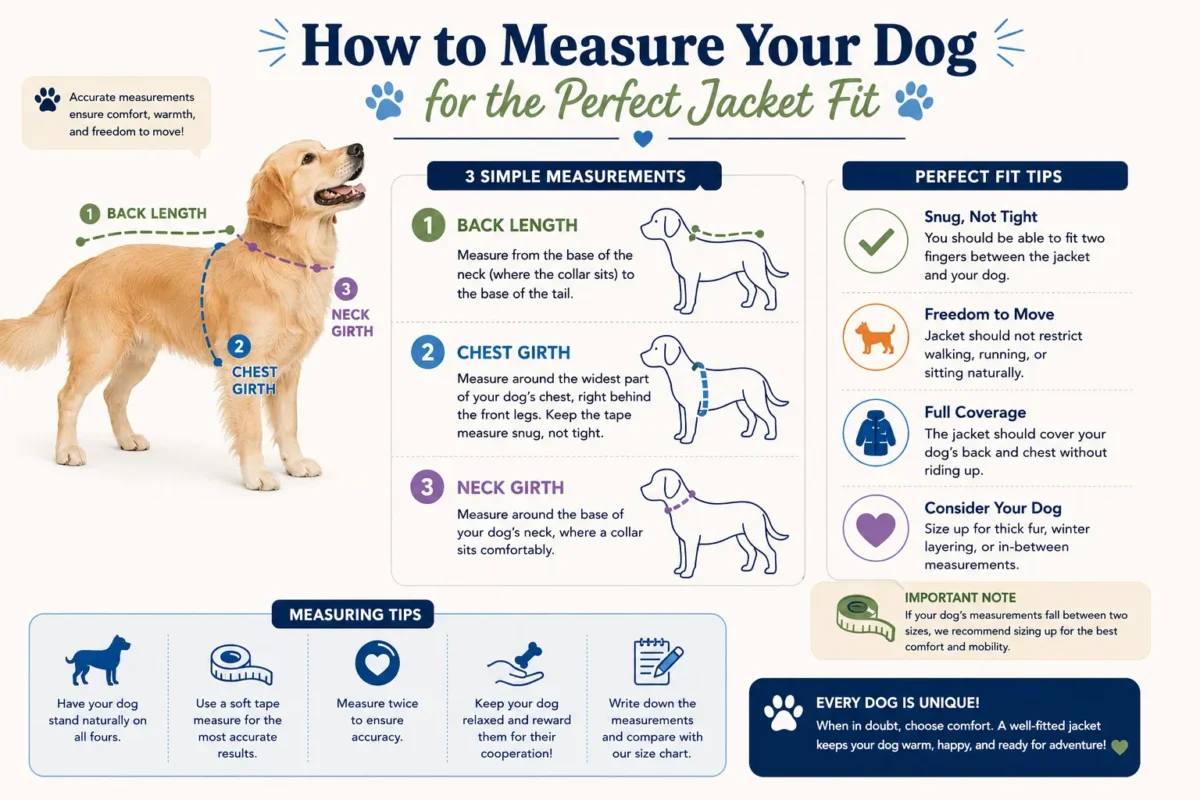
1. Back Length — The Most Critical Number
This is the measurement most brands use as their primary sizing indicator.
Start at the base of your dog’s neck — right where the collar sits — and run the tape straight along the spine to the base of the tail. Keep the tape flat and don’t follow body curves. Record this number in inches or centimeters.
This single measurement tells you roughly which size tier your dog falls into. According to American Kennel Club sizing guidance, back length is the starting point for nearly every jacket size chart.
2. Chest Girth — Where Most Fit Problems Start
Back length gets you in the ballpark. Chest girth closes the deal.
Wrap the tape measure around the widest part of your dog’s chest — typically just behind the front legs. Make sure you can slide two fingers between the tape and your dog’s body. That gap ensures the jacket won’t constrict breathing or movement.
Dogs with deep chests (like Greyhounds or Boxers) and dogs with broad chests (like French Bulldogs or Corgis) often size up here. A breed-standard chart won’t catch this. Your measurement will.
3. Neck Girth — For Jackets with Collar Coverage
Not every jacket covers the neck, but many do. If the one you’re eyeing has a collar, turtleneck, or hood, you need this number.
Measure around the base of your dog’s neck where their collar normally sits. Add a finger’s width of ease — enough so the jacket doesn’t chafe or restrict, but snug enough to keep cold air out.
4. Leg Length — Only If the Jacket Has Sleeves
Most dog jackets are sleeveless, but some cold-weather or full-coverage coats include leg coverage. If yours does, measure from the top of the front leg (where it meets the body) down to where you want the sleeve to end.
Over-long sleeves bunch at the paw and become a tripping hazard. Sleeves that end mid-leg tend to work best for most dogs.
How to Read a Dog Jacket Size Chart Without Getting Confused
Size charts vary by brand — and that’s where most buyers go wrong. A “Medium” from one brand may fit your dog perfectly. A “Medium” from another may be two sizes off.
Always cross-reference your measurements against the brand’s specific chart. Don’t guess based on size labels. According to Ruffwear’s fit guide, when measurements fall between two sizes, choose the larger one and adjust with any included straps or buckles.
Here’s a quick reference for typical size ranges, though always verify with the brand:
| Size Label | Approx. Back Length | Approx. Chest Girth |
|---|---|---|
| XS | 8–10 in | 12–16 in |
| S | 10–14 in | 16–20 in |
| M | 14–18 in | 20–26 in |
| L | 18–22 in | 26–32 in |
| XL | 22–28 in | 32–40 in |
These are approximate. Your dog’s actual measurements always take priority.
Measuring Tips for Specific Breeds and Body Types
Short-Legged, Long-Bodied Dogs (Dachshunds, Corgis, Basset Hounds)
These dogs tend to have longer back lengths relative to their chest. They often need a jacket sized up for back length and cinched in at the chest with adjustable straps. Look for brands that offer breed-specific sizing — Gooby and Dogo both carry options.
Barrel-Chested Dogs (French Bulldogs, English Bulldogs, Pugs)
Chest girth is everything here. Size for the chest first, then check that the back length isn’t excessive. Many owners of brachycephalic breeds go one size up from what the back length suggests.
Lean, Deep-Chested Dogs (Greyhounds, Whippets, Dobermans)
Standard sizing rarely fits these breeds. Greyhound-specific brands like Houndstooth Studio offer jackets cut for narrow waists and deep chests. Always measure the chest girth and compare carefully.
Puppies
Puppies grow fast. Re-measure every four to six weeks. A jacket that fits perfectly at 10 weeks may be useless at 14 weeks. Consider a slightly adjustable style with velcro or buckle closures to get a bit more mileage out of each size.
The “Two-Finger Rule” — Your Fit Check After Putting It On
Once the jacket arrives, run a final fit check before removing any tags.
Slide two fingers under every closure point — around the neck, under the belly strap, and across the chest. You should feel snug resistance, not tightness. If your fingers won’t fit, it’s too small. If the jacket shifts freely when you tug it, it’s too large.
Watch your dog walk in it. Look for:
- Restricted shoulder movement (jacket too tight across chest)
- Fabric bunching or dragging (back length too long)
- Twisting or rolling to one side (uneven fit or too loose)
A properly fitted jacket stays centered, moves with your dog, and doesn’t need constant readjusting.
H3: When Your Dog Falls Between Two Sizes
This happens more often than not. The rule is straightforward: size up, not down.
A jacket that’s slightly large can often be adjusted with belly straps or chest buckles. One that’s too small can’t be fixed — it’ll restrict movement no matter what you do. Some brands also offer size exchanges, so check the return policy before purchasing.
A Quick Note on Jacket Types and How They Affect Fit
Not all jackets measure the same way. A fleece sweater has stretch. A waterproof rain jacket does not. A quilted puffer sits differently than a slim athletic vest.
For structured, waterproof jackets — add half an inch of ease to your chest girth measurement to account for the lack of stretch. For knit or fleece styles, your standard measurements work fine since the fabric gives naturally.
Conclusion: Measure Once, Fit Right the First Time
Your dog can’t tell you the jacket pinches or pulls. They just stop walking, wriggle out of it, or look miserable — and you’re left guessing why.
Three measurements change all of that: back length, chest girth, and neck girth. Take them carefully, compare them to the brand’s actual chart, and apply the two-finger rule when the jacket arrives. That’s the whole process.
A good-fitting jacket keeps your dog warm, comfortable, and ready for whatever weather comes. And honestly, it makes walks a lot more enjoyable for both of you.
Frequently Asked Questions
How do I measure my dog for a jacket if they won’t stay still?
Enlist a helper and use treats to keep your dog occupied. Have one person offer small treat rewards at nose level while the other takes measurements. Work quickly — back length first, then chest girth, then neck. Don’t chase a moving dog with a tape measure; wait for a natural pause, then measure.
What measurement matters most when sizing a dog jacket?
Chest girth is the most important measurement for jacket fit. Many owners focus only on back length, but the chest is where fit problems actually appear. A jacket might be the right length but too tight across the chest to button or close — and that’s uncomfortable for your dog. Always measure the chest and size from there.
My dog is between two sizes on the chart — which should I pick?
Always choose the larger size when your dog falls between two options on a jacket size chart. A slightly larger jacket can be adjusted using belly straps, velcro closures, or chest buckles. A jacket that’s too small cannot be made to fit comfortably and will restrict your dog’s movement regardless of how you adjust it.
How often should I re-measure my dog for jacket sizing?
Re-measure your dog at least once a year, or any time their weight changes significantly. Puppies should be measured every four to six weeks during growth phases. Senior dogs or dogs on restricted diets may also experience body changes that affect jacket fit. Keeping current measurements on hand makes reordering fast and accurate.

Grayscale Jacket Editorial Team is a group of fashion writers and product researchers who share guides, reviews, and styling tips about jackets and outerwear. Their goal is to help readers choose high-quality, stylish jackets while staying updated with the latest fashion trends.