How to Wash and Care for Your Dog’s Jacket
Your dog’s jacket works hard — through muddy walks, rainy mornings, and everything in between. But most pet owners either wash it too rarely or handle it the wrong way, shortening its life significantly.
This guide covers exactly how to wash and care for your dog’s jacket step by step. Follow it, and you’ll keep that jacket looking sharp, smelling fresh, and fitting perfectly for much longer than you’d expect.
Why Regular Cleaning Actually Matters
A dirty jacket does more than just smell bad. Mud, bacteria, and dander build up inside the lining and can irritate your dog’s skin over time. Waterproof coatings also lose effectiveness when dirt clogs the fabric’s pores.
Cleaning your dog’s jacket regularly isn’t just about hygiene — it’s about function. According to the American Kennel Club, ill-fitting or uncleaned dog clothing can cause discomfort and skin issues. A clean jacket fits better, breathes better, and keeps your dog more comfortable.
H2: What to Check Before You Wash
Read the Care Label First
Every dog jacket has a care label. It tells you everything — water temperature, machine or hand wash only, tumble dry settings. Skipping this step causes most cleaning disasters.
Look for these common symbols:
- A tub of water = machine washable
- A hand in water = hand wash only
- A triangle = bleach instructions
- A square with a circle = dryer safe
If the label is faded, search the brand’s website using the jacket model number. Most manufacturers like Ruffwear and Canada Pooch publish full care guides online.
Check for Damage Before It Goes in the Wash
Run your hands over seams, zippers, and Velcro. A broken zipper snags in the drum. Loose stitching unravels completely. Fix small tears with a needle and thread before washing — it takes two minutes and saves the jacket.
Close all Velcro tabs. Open Velcro grabs lint and pulls at other fabrics inside the machine.
How to Wash a Dog Jacket in the Washing Machine
Most dog jackets handle machine washing just fine — if you do it correctly.
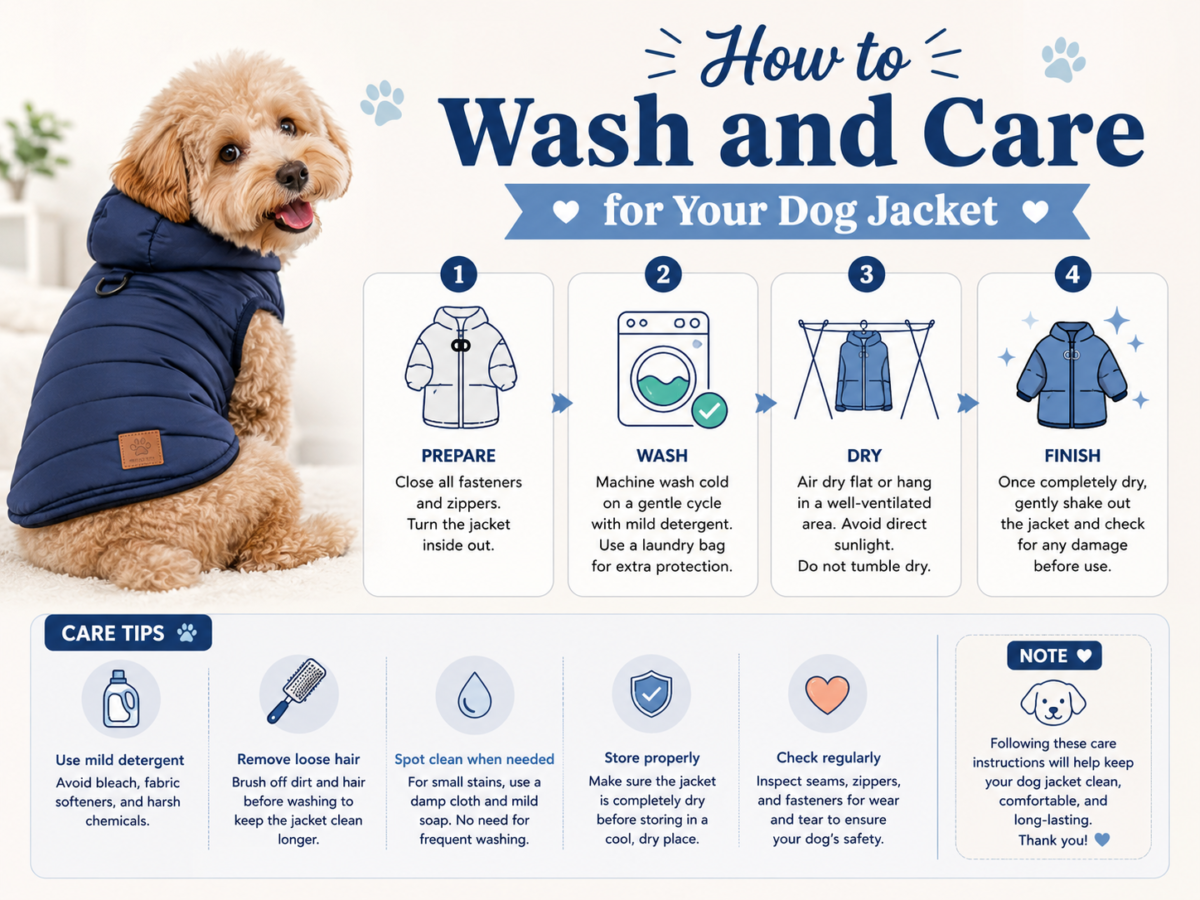
Step 1: Shake it out first. Take the jacket outside and give it a firm shake. Knock off loose mud, hair, and debris before it ever touches water. This protects your machine and gives you a cleaner result.
Step 2: Pre-treat stubborn stains. Apply a small amount of pet-safe stain remover directly to muddy spots, grass stains, or odour zones. Let it sit for five minutes.
Step 3: Use the right detergent. Choose a fragrance-free, pet-safe detergent. Avoid fabric softeners — they clog the fibres of waterproof and water-resistant fabrics. Enzyme-based detergents work particularly well for odour removal.
Step 4: Set the correct cycle. Use a gentle or delicates cycle. Cold water protects colours and prevents shrinkage. Hot water is the fastest way to ruin a dog jacket’s shape or waterproof coating.
Step 5: Wash alone or with similar items. Don’t throw the jacket in with your regular laundry. Dog hair transfers, and the jacket may need specific treatment other clothes don’t.
How to Hand Wash a Dog Jacket
Some jackets — especially padded or structured ones — wash better by hand. It’s gentler and gives you more control.
Fill a basin with cool water and a small squeeze of mild detergent. Submerge the jacket and work the fabric gently with your hands, paying extra attention to collar areas, chest straps, and underbelly panels where grime concentrates most.
Rinse thoroughly until the water runs clear. Soap residue left in the fabric irritates skin and attracts more dirt faster. Squeeze gently — never wring or twist.
Drying Your Dog’s Jacket the Right Way
Air Drying Is Almost Always Better
Hang the jacket on a drying rack or over a shower rod. Keep it away from direct sunlight, which fades colour and can break down certain synthetic fibres. Good airflow does the job within a few hours.
For quilted or padded jackets, lay them flat to dry. Hanging causes them to stretch unevenly and lose their shape.
When Can You Use the Dryer?
Only use the dryer if the care label explicitly allows it. Use the lowest heat setting — or better yet, the air-only (no heat) cycle. High heat melts synthetic materials, warps shape, and permanently destroys waterproof coatings.
Throw in a couple of dryer balls to speed up drying time without adding heat.
Restoring Waterproof Performance
If water stops beading off the jacket and starts soaking through, the DWR (Durable Water Repellent) coating has worn down. Washing won’t fix this on its own.
After the jacket is clean and dry, use a DWR re-proofer spray like Nikwax TX.Direct or Grangers Performance Repel. Follow the product instructions — most require you to apply to a damp or dry jacket and then heat-activate with a low dryer cycle.
This step makes a dramatic difference. Your dog stays drier, and the jacket lasts years longer.
How Often Should You Wash It?
This depends on how active your dog is. A general schedule works like this:
- After every muddy or wet walk — spot clean or rinse the exterior
- Every 2–4 weeks — full wash during regular use
- At the end of each season — deep clean before storage
Between washes, use a damp cloth to wipe down the jacket after walks. A lint roller handles fur and surface debris quickly. This keeps odour low and reduces how often you need a full wash.
Storing a Clean Dog Jacket Properly
Storage matters more than most people realise. Fold the jacket loosely and store it in a breathable cotton bag or an open shelf. Plastic bags trap moisture and create mildew, especially if the jacket wasn’t completely dry before packing away.
Keep it away from direct sunlight during storage. UV exposure fades fabric and degrades elastic and Velcro over time.
Signs It’s Time to Replace the Jacket
Even the best care routine has limits. Watch for these signals:
- Zipper teeth are cracked, bent, or won’t stay closed
- Seams are separating and re-sewing no longer holds
- Padding has clumped and lost its loft
- The jacket no longer repels water even after re-proofing
- It no longer fits properly and adjustment straps have lost elasticity
A jacket that no longer functions properly isn’t doing its job. At that point, replacing it keeps your dog warmer and more comfortable.
Conclusion
Caring for your dog’s jacket doesn’t take much — but the right steps make a real difference. Read the label, pre-treat stains, use the right detergent, and air dry whenever possible. Restore the waterproofing once a season, store it properly, and it’ll serve your dog through many winters to come.
Your dog works hard on those walks. Their jacket should too.
Frequently Asked Questions
Q1: Can I put my dog’s jacket in the washing machine? Yes, most dog jackets are machine washable, but always check the care label first. Use a gentle cycle, cold water, and a fragrance-free pet-safe detergent. Skip the fabric softener — it clogs waterproof fabrics and reduces their performance. If the label says hand wash only, stick to that to avoid damage.
Q2: How do I get the dog smell out of a dog jacket? The most effective way is to wash the dog jacket with an enzyme-based detergent, which breaks down the odour-causing bacteria rather than just masking the smell. Pre-soaking in a mixture of cool water and a splash of white vinegar for 15 minutes before washing also helps neutralise stubborn odours. Air dry fully — damp fabric trapped indoors brings the smell right back.
Q3: How often should I wash my dog’s jacket? For dogs on regular daily walks, a full wash every two to four weeks works well. After particularly muddy or wet outings, spot cleaning or rinsing the jacket right away prevents stains from setting. At the end of each season, give it a thorough deep clean before storing it away.
Q4: Why does my dog’s jacket no longer repel water after washing? Washing gradually wears down the DWR (Durable Water Repellent) coating on the jacket. When water soaks in instead of beading off, the coating needs to be refreshed — not the jacket replaced. Apply a DWR spray like Nikwax TX.Direct to the clean, dry jacket and follow the instructions for heat activation. This restores water repellency and extends the jacket’s lifespan significantly.

Grayscale Jacket Editorial Team is a group of fashion writers and product researchers who share guides, reviews, and styling tips about jackets and outerwear. Their goal is to help readers choose high-quality, stylish jackets while staying updated with the latest fashion trends.