Waterproof vs Insulated Dog Winter Jackets: Which One Is Better?
Winter is here, and your dog is shivering. You head online, start browsing, and suddenly face a wall of options — waterproof shells, insulated parkas, combo coats, fleece liners. The question hits fast: which type actually keeps your dog protected? This guide cuts straight through the confusion and gives you a clear answer based on your climate, your dog’s breed, and how you actually use that coat.
Here is the truth: there is no single winner. The right choice depends entirely on where you live and what your dog needs. By the end of this post, you will know exactly what to look for, what to skip, and how to pick the coat that earns its place every single winter walk.
What Does a Waterproof Dog Jacket Actually Do?
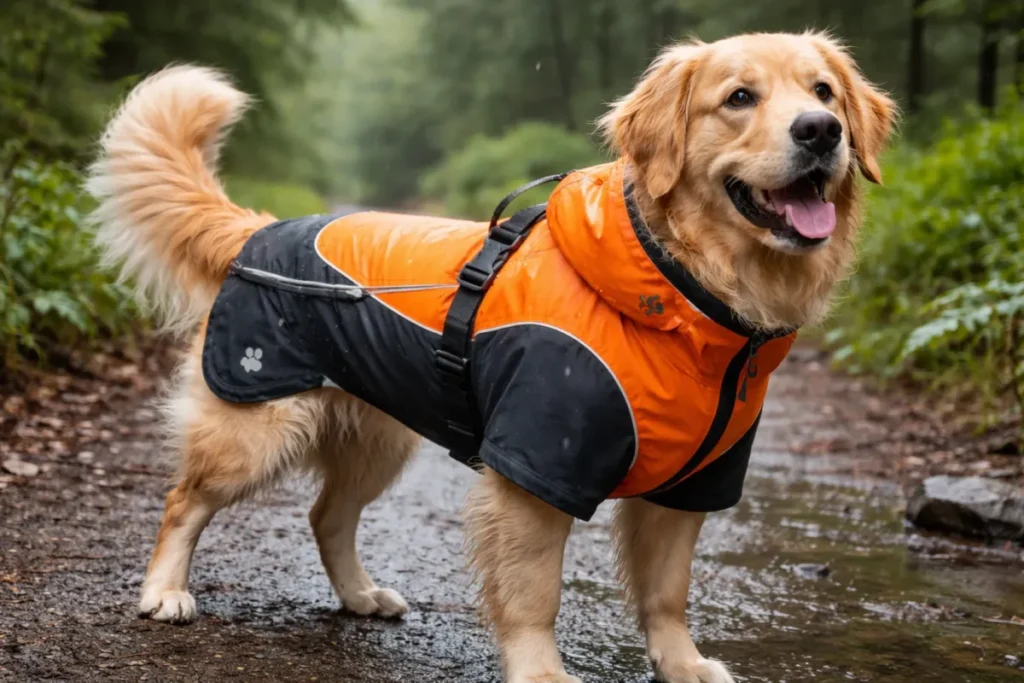
A waterproof dog jacket blocks moisture from the outside. Rain, sleet, wet snow, puddle splashes — none of it soaks through. The outer shell uses tightly woven synthetic fabrics, often with a DWR (Durable Water Repellent) coating or a sealed membrane.
Think of it as a rain shield. It keeps your dog dry. But dry does not always mean warm.
Most waterproof-only jackets carry little to no insulation. They block wind and water brilliantly, but on a dry freezing day, your dog still needs body heat to stay comfortable inside one. That is the critical limitation owners often miss when they buy a waterproof coat and wonder why their pup still shivers.
When Waterproof Jackets Make Sense
- You live in a wet, mild-winter climate (rain, drizzle, damp cold)
- Your dog runs hot and needs protection from moisture but not added warmth
- You want a lightweight outer layer that fits over a sweater or fleece
- Your dog already has a thick natural coat and just needs weather protection
A jacket that is merely water-resistant holds up in a light drizzle, but for heavy snow or slush, you need a truly waterproof shell. That distinction matters. Water-resistant and waterproof are not the same thing. Always check the waterproof rating in millimeters (mm) before buying — anything above 10,000mm handles serious precipitation.
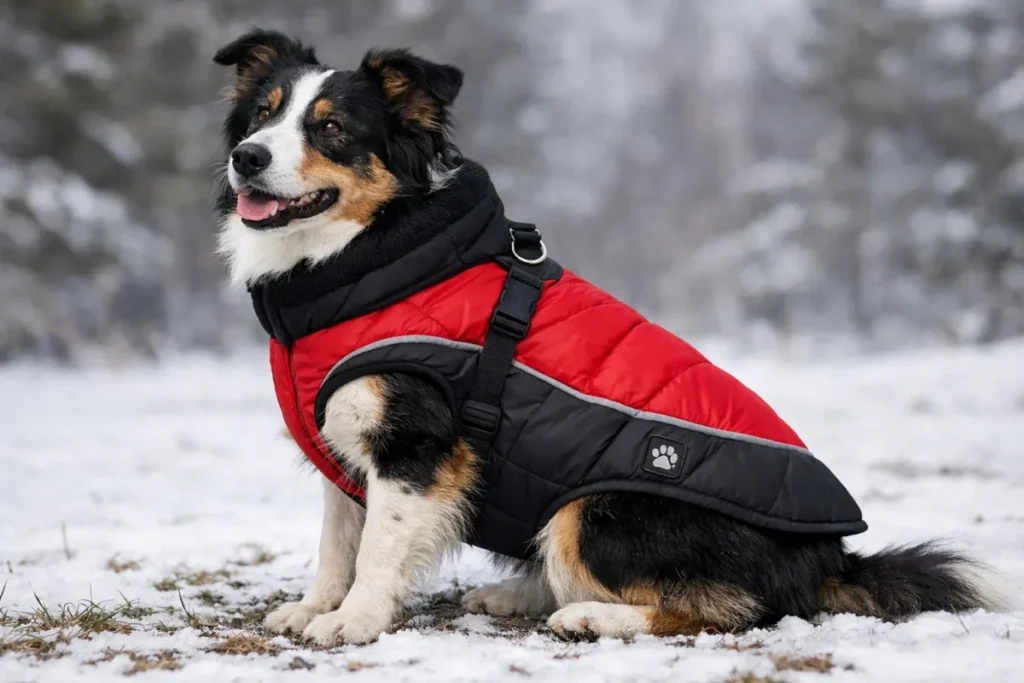
What Does an Insulated Dog Jacket Do?
An insulated dog jacket traps body heat. It works from the inside out, using synthetic fill, fleece lining, or materials like PrimaLoft to create a warm microclimate around your dog.
The warmth level depends on fill weight. A jacket with around 100 grams of polyfill works well for chilly days between 20 and 40 degrees Fahrenheit, but for truly frigid weather below 20 degrees, you want something with 200 to 250 grams of fill or a high-performance insulation like PrimaLoft.
Insulated jackets shine in dry, cold conditions. Snow that stays powdery. Cold mornings with no rain in sight. Hiking trails in the mountains. That is where insulation earns every penny.
When Insulated Jackets Make Sense
- You live in a climate with dry, freezing winters
- Your dog is a short-haired, lean, senior, or small breed
- Your walks are long and the temperature drops hard
- Your pup generates less body heat naturally
Dogs who are old, puppies, have low body fat, or have thin single coats all get cold in winter. Bully breed mixes, sighthounds, and any dog without an undercoat will need help regulating their temperature.
The Real Problem: Most Winters Are Both Wet and Cold
Here is what the marketing never tells you clearly — most winter climates do not fit neatly into one category. You get cold rain one day, dry frost the next, slushy snowfall on the weekend. A purely waterproof coat leaves your dog cold. A purely insulated coat leaves your dog soaked.
That is exactly why the best-performing dog winter jackets combine both features.
Waterproof + Insulated: The Best of Both Worlds
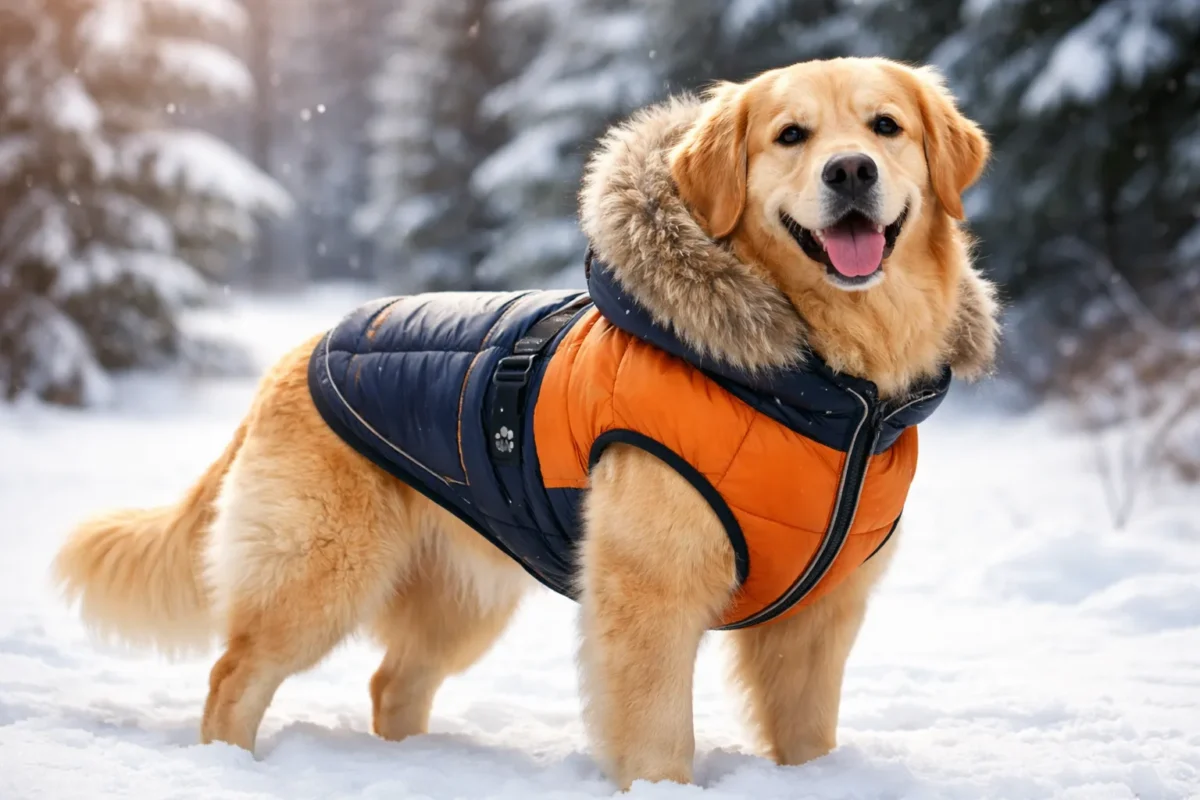
For areas where temperatures frequently plunge near or below freezing, an insulated weatherproof coat is the better option. Some coats come with protective outer shells that repel water, making them good for snowy environments and areas that might be misty and cold.
Combo coats typically feature a waterproof or water-repellent outer shell layered over synthetic insulation. Brands like Ruffwear, Hurtta, and Non-stop Dogwear have built entire product lines around this concept. The Ruffwear Vert Jacket, for example, pairs a waterproof windproof shell with recycled lofted insulation — giving active dogs full weather coverage without sacrificing range of motion.
This is the category most dog owners with variable winters should explore first.
How to Choose: A Climate-Based Guide
Stop guessing. Match the jacket type to your actual weather.
Mild, rainy winters (40–55°F with consistent rain) Go waterproof-only or a lightweight waterproof with a thin liner. Your dog stays dry without overheating. A form-fitting waterproof shell over a thin base layer works perfectly here.
Dry, cold winters (sub-30°F, minimal precipitation) Go insulated. Warmth is the priority. Look for high fill weight (150g+) and chest-to-belly coverage. Fleece liners also work well in this scenario as a standalone option.
Mixed winters (cold rain, sleet, wet snow, temperature swings) Go insulated + waterproof. This is the most common scenario and the smartest investment. You get one jacket that handles everything. Pay attention to breathability too — active dogs overheat fast, even in cold weather.
Extreme cold (below 0°F / deep mountain winters) Go maximum insulation with a waterproof shell. Look for extended hip and thigh coverage, a storm collar, and leg loops to keep the jacket in place. This is the territory of serious gear like the Hurtta Extreme Warmer or Ruffwear Powder Hound.
Which Dogs Need a Dog Winter Jacket the Most?
Not every dog needs a coat. But certain dogs absolutely do.
Short-haired breeds lose heat fast. Think Greyhounds, Whippets, Chihuahuas, Boxers, Vizslas, Boston Terriers, and Pit Bulls. They have no undercoat and minimal insulating fat. A dog winter jacket is not optional for these breeds in cold climates — it is essential gear.
Small dogs face a double disadvantage. Their smaller body mass means they lose heat proportionally faster than large dogs. Even a few minutes outside in freezing temperatures can cause real discomfort.
Senior dogs struggle with temperature regulation. Older dogs often have reduced circulation and less muscle mass. Cold weather can worsen joint stiffness and arthritis. A warm coat makes every winter walk more comfortable and less painful.
Lean, low-body-fat dogs lack the natural insulation that fat provides. Without body fat for insulation, lean dogs struggle to stay warm. A well-fitted insulated jacket fills that gap directly.
Puppies have not yet developed full temperature regulation. They chill quickly, especially on longer walks or in wet conditions.
If your dog falls into any of these categories, a coat is not a fashion accessory. It is a practical piece of gear that protects their health.
Fit Matters as Much as Insulation
A coat with brilliant insulation still fails if the fit is wrong. The fit of a dog jacket determines how warm it keeps your dog. It does not matter how warm a jacket claims to be — if it is too big for your dog, it will not keep them insulated.
Look for these fit markers when selecting a coat:
Belly and chest coverage — the underside of a dog loses heat fast. A coat that only covers the back offers far less warmth than one with full belly coverage. This is one of the most commonly overlooked details.
Shoulder-to-tail length — the coat should reach from the base of the neck to the base of the tail. Anything shorter leaves the hindquarters exposed.
Adjustable closures — neck, chest, and waist adjustments let you fine-tune the fit without restricting movement. Velcro closures work well for quick on-and-off. Clips offer more security.
Harness compatibility — check for a leash portal or harness opening. Many dog owners use harnesses year-round, and a coat that blocks harness access creates a real daily frustration. Look for jackets with a designated back portal that lines up with your specific harness.
Too tight, and the coat compresses the natural fur coat, reducing its insulating ability and restricting movement. Too loose, and it shifts, leading to chafing, discomfort, and even injuries over time.
What to Look for on the Label
Shopping online is fast. Reading labels carefully is faster and saves you a return headache. Here is what the specs actually mean:
Waterproof rating (mm) — measures how much water pressure the fabric resists before it leaks. Ratings below 5,000mm handle light drizzle. 10,000mm handles moderate rain. 15,000mm+ handles sustained heavy rain and wet snow.
Fill weight (grams per square meter) — tells you how much insulation is in the jacket. Higher fill = warmer jacket. Match fill weight to your expected temperatures.
DWR coating — Durable Water Repellent. A surface treatment that causes water to bead and roll off. It wears down over time and can be refreshed with a wash cycle.
Breathability rating (g/m²/24h) — tells you how much moisture vapor escapes through the fabric. Higher is better for active dogs. A breathable jacket prevents your dog from overheating mid-run even when it is cold outside.
Layering: An Option Worth Considering
You do not always need one coat to do everything. Layering gives you flexibility across changing conditions.
A base layer fleece or sweater worn under a waterproof shell is a classic combination. The fleece traps body heat. The shell blocks wind and moisture. Together, they outperform many single-layer combo coats at a lower combined price point.
Fleece jackets and sweaters work as standalone insulation in dry, cool conditions, or as a midlayer worn under a shell in colder or wetter conditions.
This approach works especially well for owners in climates with dramatic daily temperature swings — cold mornings, warmer afternoons. You can strip the outer shell as the day warms up and leave the fleece on.
Quick Comparison: Waterproof vs Insulated vs Combo
| Feature | Waterproof Only | Insulated Only | Waterproof + Insulated |
|---|---|---|---|
| Keeps dog dry | Yes | No | Yes |
| Keeps dog warm | Minimal | Yes | Yes |
| Best climate | Mild, wet | Cold, dry | Mixed or extreme cold |
| Weight | Light | Medium | Medium–Heavy |
| Best for | Short walks in rain | Long cold hikes | Most winter conditions |
| Layering needed? | Often yes | Sometimes | Rarely |
Warm Conclusion
Choosing between a waterproof and an insulated dog winter jacket is not really an either/or decision for most people. It is a question of what your specific dog faces every day you step outside together.
If your winters are wet and mild, go waterproof with a layering option. If your winters are dry and brutally cold, go insulated. And if your winters are anything like most — unpredictable, messy, and layered with changing conditions — invest in a well-made combo jacket that handles everything without compromise.
Your dog cannot tell you when they are cold. But they show you every time they shiver, slow down, or beg to go back inside. The right coat means fewer of those moments and more good walks, deep into winter.
FAQ: Waterproof vs Insulated Dog Winter Jackets
1. Is a waterproof dog jacket warm enough for winter? Not on its own. A waterproof jacket keeps moisture out but provides minimal warmth. In mild, rainy climates it works well, but in cold temperatures, pair it with a fleece base layer or choose a jacket that combines waterproofing with insulation for real winter protection.
2. What type of dog winter jacket is best for short-haired breeds? Short-haired breeds need an insulated jacket with full belly and chest coverage. They lose body heat quickly and have no natural undercoat to fall back on. In wet or snowy climates, an insulated waterproof combo coat is the safest choice for breeds like Greyhounds, Boxers, and Chihuahuas.
3. How do I know if my dog is too cold on walks? Watch for shivering, slowing down, lifting paws off the ground, or trying to turn back home. These are clear signals your dog is cold and needs more protection. A properly fitted dog winter jacket with the right insulation level for your climate eliminates most of these issues.
4. Can a dog jacket be both waterproof and insulated at the same time? Yes, and that is often the best option. Many premium dog jackets combine a waterproof outer shell with synthetic insulation inside. Brands like Ruffwear and Hurtta specialize in exactly this. These combo coats handle rain, snow, wind, and freezing temperatures without needing a separate layering system.

Grayscale Jacket Editorial Team is a group of fashion writers and product researchers who share guides, reviews, and styling tips about jackets and outerwear. Their goal is to help readers choose high-quality, stylish jackets while staying updated with the latest fashion trends.