Common Mistakes When Using a Thunder Jacket for Dogs
You bought a thunder jacket for dogs, followed the instructions, and… your dog still trembles through every storm. Frustrating, right? You’re not alone — and the good news is that the product usually isn’t the problem.
Most dogs don’t respond well to anxiety vests because of small, easy-to-fix mistakes in how owners use them. This guide walks you through every common error, so you can finally give your dog the calm they deserve.
Why Even the Best Thunder Jacket Can Fail
Anxiety wraps work through maintained pressure — the same principle behind swaddling an infant. When the fit is off or the timing is wrong, the calming effect disappears entirely. ThunderShirt’s own research shows that correct application is what separates an 80% success rate from a zero-percent one.
So before blaming dog calming vest reviews you read online, check whether these mistakes sound familiar.
“The vest itself is rarely the issue. The human handling it almost always is.”
The 9 Most Common Thunder Jacket Mistakes
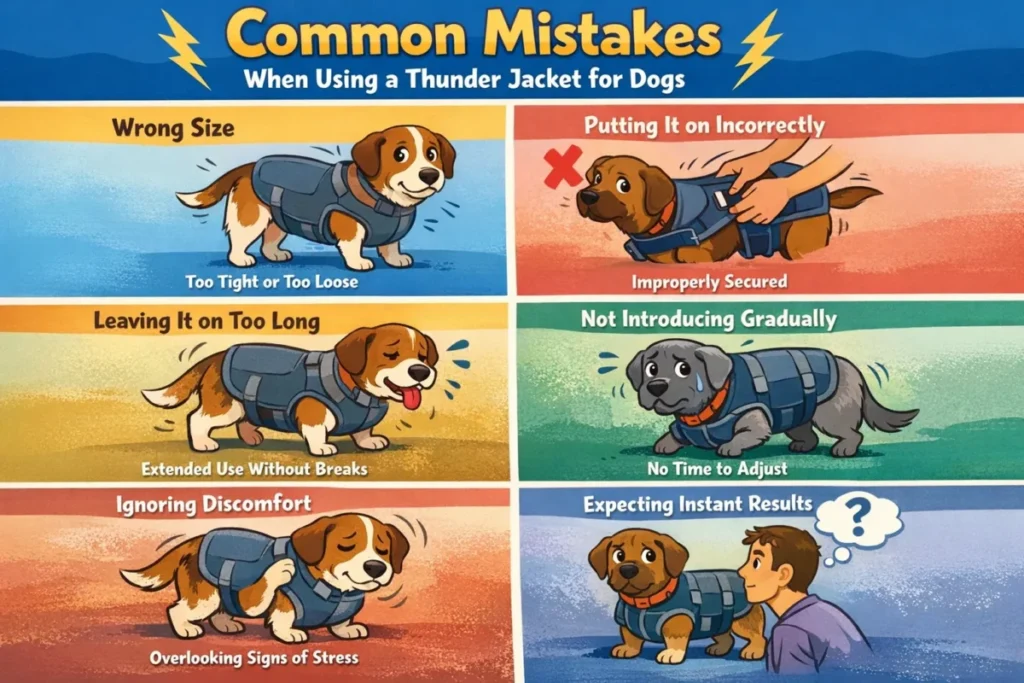
- Wrong Fit — Too Loose or Too Tight A vest that gaps at the sides does nothing. Neither does one that restricts breathing. The ideal fit lets you slide two fingers underneath the fabric across your dog’s chest. Check the official sizing guide before assuming your dog’s weight equals a specific size — torso shape matters just as much.
- Putting It On During a Full-Blown Storm This is the biggest mistake owners make with thunder jackets for dogs. By the time thunder rattles the windows, your dog’s stress hormones are already peaking. Introducing something new at that moment often makes anxiety worse. Put the vest on 20–30 minutes before the storm hits. Use a weather app like Weather.com to check forecasts and stay ahead.
- Only Using It During Storms Dogs learn through repetition. If the vest only appears when they’re already scared, they associate it with fear — the opposite of what you want. Wear the vest during calm, happy moments: mealtime, play sessions, lazy evenings. That positive association is what makes it work when dog anxiety during thunderstorms strikes.
- Skipping the Desensitization Phase Introduce the vest gradually. Let your dog sniff it first. Then drape it loosely. Then fasten one strap. Build up over several sessions. Rushing this step is why many owners conclude anxiety wraps don’t work — when in fact their dog simply never got used to wearing one.
- Reinforcing Anxious Behaviour While the Vest Is On When your dog whimpers, the instinct is to cuddle them. Resist it. Excessive soothing tells your dog there’s something genuinely worth panicking about. Stay calm, act normal, and let the vest do its job. A quiet, confident owner is part of the calming system.
- Wrong Size for Small Breeds A vest designed for a Labrador-sized torso does not scale down to a Chihuahua. Finding the right thunder jacket for small dogs means measuring your dog’s girth — typically just behind the front legs — and matching that number to size charts, not weight ranges.
- Leaving It On for Hours at a Stretch Continuous pressure loses effectiveness after about 30 minutes, and prolonged wear can cause skin irritation or overheating. Remove the vest when the trigger passes. Give your dog a break, then reapply if needed. Think of it as a tool, not a permanent accessory.
- Using It as the Only Strategy A vest alone rarely resolves severe anxiety. Understanding how does a thunder jacket work means understanding it works best as part of a toolkit — not a standalone cure. Pair it with a calm den space, white noise, and if anxiety is extreme, a conversation with your vet about behavioural support or supplements.
- Not Giving It Enough TriesSome dogs need five or more exposures before they respond positively. Give your dog at least three full storm cycles with the vest properly fitted and applied early. Only then can you fairly assess whether it’s the right solution for your pet.
How to Get the Fit Right Every Time
Proper fit is the single highest-impact adjustment you can make. Here’s a quick process that works for most breeds:
Step 1 — Measure Your Dog’s Girth
Use a soft tape measure. Wrap it around your dog’s torso, just behind the front legs. Record that number in inches. This is your primary sizing measurement — weight is secondary.
Step 2 — Check the Brand’s Specific Chart
Every brand sizes slightly differently. The best thunder jacket for dogs isn’t necessarily the most popular one — it’s the one that fits your dog’s unique shape. Read reviews that specifically mention your dog’s breed, since body proportions vary dramatically.
Step 3 — The Two-Finger Test
Once fastened, slide two fingers beneath the belly strap. Snug but not restricted — that’s the sweet spot. If you can fit your whole hand, it’s too loose. If you can’t fit any fingers, loosen it immediately.
🐾 Quick Tip
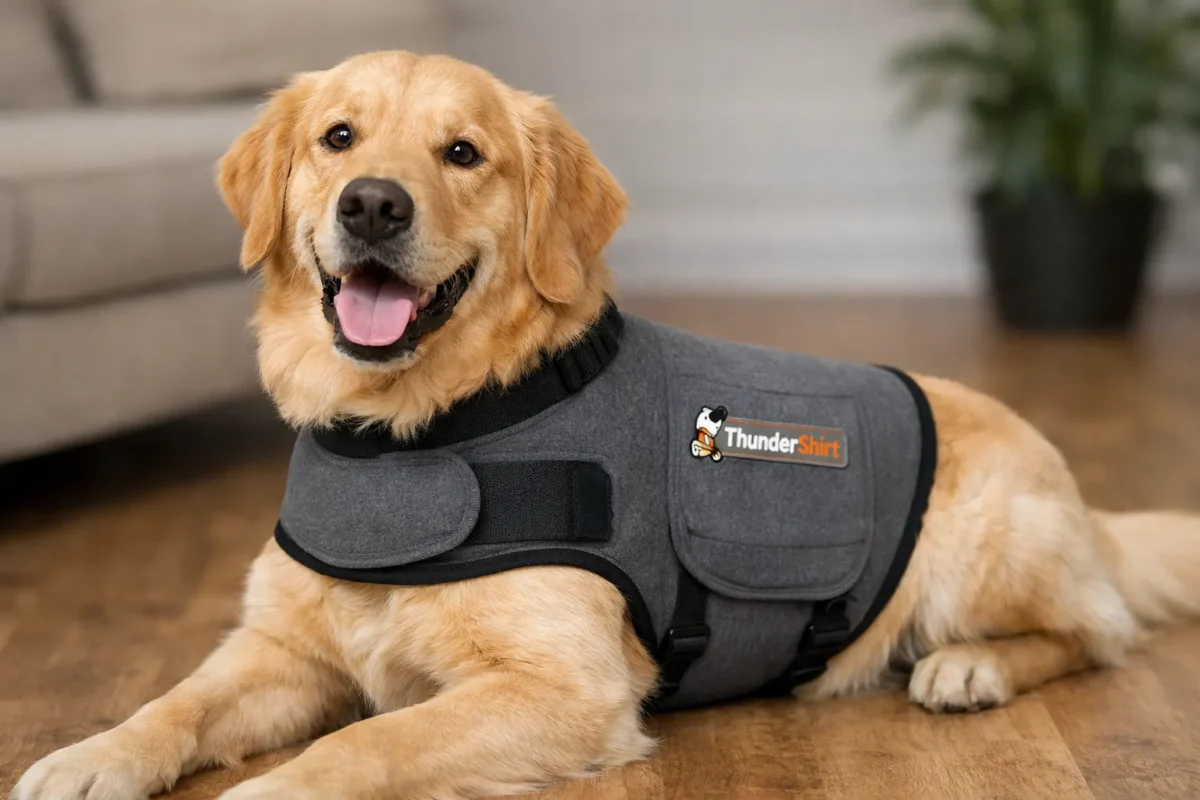
If you’re choosing between a thunder jacket vs thunder shirt, know that “ThunderShirt” is actually the brand name — Thunder Jacket is a generic term for the product category. Both work on the same pressure principle; what matters most is fit, not brand loyalty.
Do Thunder Jackets Actually Work for Dogs?
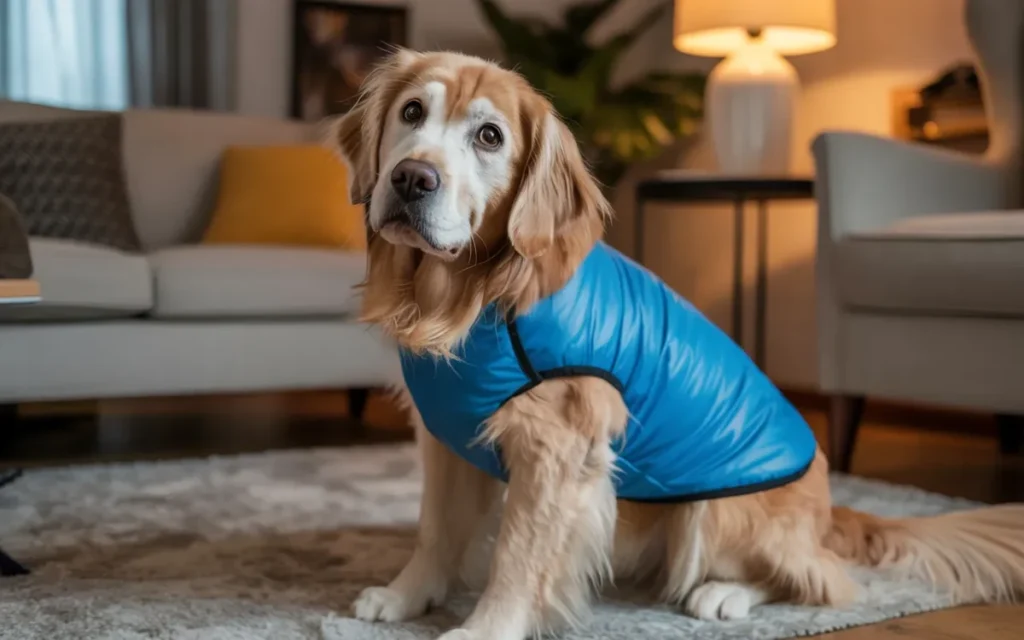
This question comes up constantly, and the honest answer is: yes, for most dogs — when used correctly. Studies on do thunder jackets work for dogs suggest a success rate between 70–80% when owners follow proper fitting and timing guidelines. A 2014 study published in the Journal of Veterinary Behavior found significant anxiety reduction in dogs wearing pressure wraps during triggering events.
The cases where vests fail are almost always tied to the mistakes listed above — not an inherent flaw in the product. That said, dogs with severe thunder jacket for dog anxiety needs may require additional support. Never hesitate to loop in your veterinarian if storms cause extreme distress.
How to Calm a Dog During Storms — Beyond the Vest
Even a perfect-fitting vest works better with environmental support. Here’s what pairs well:
- White noise or calming music. Research from the ASPCA points to classical music and species-specific calming playlists as effective anxiety buffers.
- A dedicated safe space. A crate lined with familiar-smelling bedding gives dogs a sense of control during overwhelming sensory input.
- Desensitization audio training. Apps like ThunderShirt’s training portal play storm sounds at low volumes so dogs can gradually build tolerance.
- Your calm presence. Sit near your dog — not hovering anxiously — and engage in a quiet activity. Your body language sets the emotional tone in the room.
Knowing how to calm a dog during storms is a skill that compounds. Every positive storm experience rewires your dog’s fear response slightly. The vest accelerates that process — but it doesn’t replace it.
Your Dog Deserves More Than Just Surviving the Storm
Most anxiety vests fail because of a handful of preventable mistakes — wrong fit, wrong timing, or no positive association built before the crisis hits. Fix those, and you’ll likely see a dog who moves from trembling to tolerable within a few storm cycles.
Start today: measure your dog’s girth, check the sizing chart, and put the vest on during dinner tonight — not during the next downpour. Small adjustments, big results. Your dog is counting on you to figure it out, and now you have everything you need.
People Also Ask
Real questions. Straight answers.
Do thunder jackets actually work for dogs with severe anxiety?
Yes — a thunder jacket for dogs can work even in cases of moderate-to-severe anxiety, but it rarely works alone. Research suggests a 70–80% success rate when the vest fits correctly and gets introduced before the trigger starts. For severe cases, pairing it with veterinary guidance or behavioral therapy dramatically improves results. Think of it as a powerful tool that works best within a broader calming strategy.
How tight should a thunder jacket be on my dog?
A thunder jacket should feel snug but never restrictive. The standard test: slide two fingers beneath the belly strap. If they slide in smoothly but with slight resistance, the fit is correct. Too loose and it won’t apply the sustained pressure needed to calm your dog. Too tight and it becomes uncomfortable, causing your dog to resist wearing it altogether. Always re-check the fit if your dog’s weight changes.
When should I put the thunder jacket on my dog before a storm?
Put the vest on 20 to 30 minutes before the storm arrives — not after it starts. Once a dog’s anxiety peaks, adding something new to their body often amplifies stress rather than reducing it. Use a weather app to track incoming storms and build a routine around early application.
What’s the difference between a thunder jacket and a ThunderShirt?
ThunderShirt is a brand name — one of the most recognized in the anxiety wrap market. “Thunder jacket” is the general term for any pressure-based dog anxiety vest. Both operate on the same principle: gentle, consistent pressure that mimics the calming effect of being held. When comparing thunder jacket vs thunder shirt options, focus on fit and sizing over brand name. A lesser-known vest that fits perfectly will outperform a popular brand that doesn’t match your dog’s torso shape.

Grayscale Jacket Editorial Team is a group of fashion writers and product researchers who share guides, reviews, and styling tips about jackets and outerwear. Their goal is to help readers choose high-quality, stylish jackets while staying updated with the latest fashion trends.